
Cerezo Osaka vs Urawa Tactical Breakdown & Match Analysis: Can Hosts Overturn a 2-0 Cup Deficit?
- ▸Primary Thesis: Draw / Away Win reflects Urawa's rested frontline, 2-0 aggregate control, and Cerezo's verified absences (Confidence: Moderate, Value: Moderate)
- ▸Secondary Angle: Under 2.5 total goals aligns with a 2.25 lambda total and four straight low-scoring meetings (Confidence: Moderate, Value: Moderate)
- ▸Contingency Angle: Late 1:2 away breakaway if Cerezo score first and sacrifice defensive structure after 70 minutes (Confidence: Low, Value: Moderate)
Matchup Intelligence & Head-to-Head
Season Benchmarks & H2HCerezo Osaka Attack vs Defence Urawa
Recent Head-to-Head Meetings
No recent head-to-head records found in archive.
The central dilemma centers on whether injury-depleted Cerezo Osaka can overturn a two-goal first-leg deficit at Yodoko Sakura Stadium against a fresher, tactically disciplined Urawa side in the 2026/27 J-League Cup Quarter-finals second leg. Having fallen 2–0 at Saitama Stadium 2002 on November 11, Pablo Machín's hosts must commit bodies forward in search of multiple goals while managing a stretched squad missing key creative outlets. Conversely, Cho Kwi-jae's visitors arrive holding a commanding aggregate cushion and kept several frontline starters in reserve during the opening leg. XG Mind AI deconstructs this knockout decider by integrating goal-based Poisson expectancy modeling (lambda_total of 2.25) with verified squad availability, positional threat metrics, and second-leg game-state dynamics to map the most probable 90-minute scripts and scoreline outcomes.
📌 Cerezo Osaka vs Urawa: Match Intelligence Brief
- Fixture ID: 1648035
- Matchup: Cerezo Osaka vs Urawa
- Competition: J-League Cup, Quarter-finals (2nd Leg; Urawa lead 2–0 on aggregate)
- Kickoff Time: 2026-11-15 06:00 UTC
- Key Tactical Watchpoint: Whether Cerezo Osaka's returning attackers can breach Urawa's compact block before Cho Kwi-jae's rested forward line exploits transition space behind a pushed-up home defense.
📊 1. Cerezo Osaka Attacking Structure vs Urawa Defensive Counter
⚔️ Head-to-Head History: Four Straight Low-Scoring Clashes Before Tonight's Decider
Prior to Urawa's 2–0 first-leg victory on November 11, 2026, Cerezo Osaka held a clear edge across the preceding 10 competitive meetings (6 wins, 3 draws, 1 loss; 15 goals scored to 5 conceded). However, the four most recent clashes—spanning October 2024 through November 2026—have all produced two total goals or fewer (0:1, 1:1, 0:0, and 0:2), signaling a sharp tightening in recent tactical matchups under newer coaching regimes.
| Date | Competition | Home Team | Score (HT) | Away Team |
| 2025-05-28 | J1 League | Urawa | 0:0 (0:0) | Cerezo Osaka |
| 2025-03-28 | J1 League | Cerezo Osaka | 1:1 (1:0) | Urawa |
| 2024-10-05 | J1 League | Urawa | 0:1 (0:1) | Cerezo Osaka |
| 2024-06-15 | J1 League | Cerezo Osaka | 2:1 (1:0) | Urawa |
| 2023-07-16 | J1 League | Cerezo Osaka | 2:0 (2:0) | Urawa |
📈 Team Form & Tactical Style Breakdown: Urgent Home Possession vs Compact Transition Control
Home Team (Cerezo Osaka): Returning to Yodoko Sakura Stadium after four consecutive away fixtures, Cerezo Osaka sit 11th in the 2026 J1 League (17 points from 14 matches: 4W-5D-5L) and enter this second leg carrying a weighted recent form score of 42.9 (LWLWD). Under manager Pablo Machín, Cerezo typically employ a balanced, flank-oriented 4-4-2 build-up led by Lucas Fernandes (76.3 OTI, 6.9 form rating) and midfielder Shunta Tanaka (57.7 DII, 6.5 form rating). While they showed attacking punch in a 3:2 J1 League Osaka Derby win at Gamba Osaka on November 8—where Pablo Sabbag scored and Jackson Irvine started—and a 3:1 J-League Cup win at Mito Hollyhock on October 28, Cerezo's back line has conceded at least two goals in four of their last five matches, posting a decayed goals-conceded average of 2.23. Forced into heavy rotation for the November 11 first leg (0:2 loss at Urawa) and further hampered by midfield absences, Cerezo face acute tension between chasing two goals and protecting their own transition channels.
Away Team (Urawa): Sitting ninth in the J1 League (22 points from 14 matches: 7W-1D-6L), Cho Kwi-jae's Urawa arrive in stronger recent shape (WDLDW, weighted form score 55.1) and remain unbeaten across three 2026 J-League Cup outings (3 wins, including two away victories and a 66.7% cup clean-sheet rate). Aside from a heavy 0:4 league defeat at Kashiwa Reysol on October 31, Urawa have demonstrated resilient game management in a 1:1 cup draw at Nagoya Grampus, a 2:2 J1 League draw at Vissel Kobe on November 8, and Wednesday's disciplined 2:0 first-leg victory sealed by late goals from Hayate Ueki (74') and Hiiro Komori (90+4'). Crucially, Cho Kwi-jae kept primary attackers Takuro Kaneko (7.2 form, 58.2 OTI, 62.6 GIM), Matheus Sávio (6.9 form, 61.3 OTI), Ryoma Watanabe, and Samuel Gustafson on the bench during the first leg. With fresher legs available to deploy into open space, Urawa possess an ideal counter-attacking platform to punish any home overcommitment.
🔍 Core Statistical Comparison: Narrow Scoring Margins Masked by Contrasting Form Trajectories
Aligned same-competition Expected Goals (xG) and Expected Goals Against (xGA) figures are unavailable for this J-League Cup pairing, so attacking and defensive baselines rely on competition goal averages (1.20 vs 1.10 goals scored; 1.00 vs 1.20 conceded) supplemented by 2026 J1 League territory data.
| Metric | Cerezo Osaka (Season) | Urawa (Season) |
| Expected Goals (xG / match) | N/A (not aligned) | N/A (not aligned) |
| Expected Goals Against (xGA / match) | N/A (not aligned) | N/A (not aligned) |
| Goals Scored / match (Cup baseline) | 1.20 | 1.10 |
| Goals Conceded / match (Cup baseline) | 1.00 | 1.20 |
| Average Possession (%) (J1 League) | 50.5%–52.0% | 51.0%–54.0% |
| Shots / match (J1 League) | 11.4–12.9 | 12.2 |
| Shots on Target / match (J1 League) | 4.3 | 4.1 |
| Corners Won / match (J1 League) | 4.65 | N/A (combined ~9.5/match) |
⚠️ Key Absences & Squad Impact Assessment: Masaya Shibayama and Yumeki Yokoyama Out; Shinji Kagawa and Kosei Okazawa Doubtful
Although the automated injury feed lists empty records for both teams, verified club announcements, Japan Football Association (JFA) squad releases, and Japanese press reports confirm material absences that reshape Cerezo Osaka's selection.
- Cerezo Osaka — Confirmed Out:
- Masaya Shibayama (Left knee multiple ligament injury, Out): Sidelined long-term since August 2026 (DAZN / Gekisaka / Football-Zone), depriving Cerezo of the highest-rated player in their squad profile (85.2 overall score, 64.8 GIM, 7.5 form rating) and removing a primary ball-carrier and scoring link between midfield and attack.
- Yumeki Yokoyama (Japan U-21 international duty, Out): Called up to the Japan U-21 squad for the November 8–18 Spain/Egypt tour (cerezo.jp / JFA), removing a key wide forward option (6.8 form rating, 50.5 OTI) who featured off the bench against Spain U-21 on November 13.
- Cerezo Osaka — Doubtful:
- Shinji Kagawa (Left ankle injury, Doubtful): Forced off after 20 minutes against Kashima on October 31 (Soccer Digest Web) and omitted from both the November 8 Osaka Derby and November 11 first leg (Football-Zone). If he misses out, Cerezo lose central composure in tight spaces; if he returns, match sharpness after two weeks sidelined remains uncertain.
- Kosei Okazawa (Leg injury, Doubtful): Substituted injured in the 52nd minute of the November 11 first leg (cerezo.jp / J.League), with no club clearance published prior to kickoff. If he misses out, Cerezo's central midfield depth—which only stretched to eight of nine permitted bench spots in leg one—tightens further.
- Urawa — Confirmed Out & Squad Status:
- Shuta Sasa (Japan U-21 international duty, Out): Away on the same November 8–18 Japan U-21 tour (urawa-reds.co.jp / JFA), removing a rotational midfield option (52.4 OTI, 6.4 form rating).
- Beyond Sasa, Urawa have no verified match-specific absences in the supplied feed, with Harumi Minamino having returned from an October knock to start the first leg and primary starters Takuro Kaneko, Matheus Sávio, Hiiro Komori, and Tatsuki Seko available.
🔬 Advanced Metrics Comparison: Urawa Forward Threat (54.0 FW-OTI) Meets Stretched Host Defense
| Tactical Dimension | Cerezo Osaka | Urawa | Comparative Edge |
| Forward Threat Index (FW-OTI) | 47.9 | 54.0 | Urawa (+6.1), led by Matheus Sávio (61.3) and H. Minamino (59.0) |
| Defensive Involvement (DF-DII) | 51.5 | 46.5 | Higher defensive-action volume for Cerezo (51.5 vs 46.5) |
| Defensive Quality (xGA / match) | N/A (not aligned) | N/A (not aligned) | Urawa hold lower recent goals conceded (1.39 vs 2.23 decayed avg) |
| Midfield Playmaking (MF-OTI) | 48.4 | 45.5 | Cerezo (+2.9) led by Lucas Fernandes (76.3), though Shibayama is out |
| Key Player Influence (Top GIM) | 64.8 (M. Shibayama, Out) / 63.4 (R. Inoue) | 62.6 (T. Kaneko) | Balanced among available starters (Inoue 63.4 vs Kaneko 62.6) |
| Adjusted Squad Form Rating | 6.7 | 6.7 | Even (0–10 scale across available squad groups) |
| Clean Sheet Frequency (%) | N/A (0% in 4 cup ties) | N/A (66.7% in 3 cup ties) | Urawa hold verified cup clean-sheet superiority |
| Big Chance Waste Rate (%) | N/A | N/A | Unavailable in supplied tactical fingerprint |
Penetration & Matchup Analysis:
Urawa's forward unit carries a clear positional threat edge (54.0 FW-OTI vs Cerezo's 47.9), driven by Matheus Sávio (61.3 OTI), Harumi Minamino (59.0 OTI), and Takuro Kaneko (58.2 OTI), against a Cerezo back line that has recorded zero clean sheets across four J-League Cup matches and conceded 11 goals across its past five fixtures. While Lucas Fernandes (76.3 OTI) gives Cerezo elite wide creativity alongside returning center-backs Rikito Inoue and Shinnosuke Hatanaka, the confirmed absence of Masaya Shibayama and Yumeki Yokoyama blunts Cerezo's interior penetration against Urawa's disciplined cup structure (66.7% clean-sheet rate, shielded by Tatsuki Seko at 67.8 DII).
⚖️ Referee & Officiating Analysis: Match Official Pending Confirmation
- Match Official: To be announced (JFA appointments are finalized close to kickoff).
- Officiating Tendency: With the match referee unconfirmed prior to the evidence cutoff, specific card averages, foul thresholds, and penalty tendencies cannot be established.
- Tactical Repercussions: Because Cerezo Osaka must press aggressively from the opening stages to erase a 2–0 deficit while Urawa look to slow tempo and spring counters, tactical fouls around midfield transitions will carry heightened importance regardless of who holds the whistle.
🤔 2. Can Urawa Disrupt Cerezo Osaka? Dual Perspective
🟢 Arguments Supporting Cerezo Osaka
- Rested First-Team Catalysts Returning at Home: After playing four consecutive road matches and rotating heavily in Wednesday's first leg, Pablo Machín can restore Jackson Irvine, Pablo Sabbag, Rikito Inoue, and Shinnosuke Hatanaka into the starting XI alongside Lucas Fernandes (76.3 OTI), giving Cerezo noticeably stronger physical presence and box threat at Yodoko Sakura Stadium.
- Wide Creation and Set-Piece Routes: With Lucas Fernandes providing high-volume delivery from the flanks and Pablo Sabbag offering an aerial target, Cerezo have already netted four set-piece goals in the cup dataset and scored at least twice in three of their last four matches prior to leg one (2:2, 3:1, 3:2).
- Urgent Two-Goal Deficit Incentive & Home H2H Record: Trailing 2–0 forces Cerezo into high-tempo front-foot football from minute one, backed by an encouraging historical home record against Urawa that saw them go unbeaten across five prior home meetings in the 2022–2025 H2H sample (3 wins, 2 draws).
🔴 Arguments Opposing Cerezo Osaka / Supporting Urawa
- Verified Key Absences and Thin Bench Depth: Confirming Masaya Shibayama (long-term knee injury) and Yumeki Yokoyama (Japan U-21 duty) as out—alongside fitness doubts over Shinji Kagawa and Kosei Okazawa—leaves Cerezo stripped of creative depth after already naming just eight of nine possible substitutes in leg one.
- Fresh Urawa Attackers Exploiting Cerezo's Defensive Leakage: Urawa rested Takuro Kaneko (7.2 form), Matheus Sávio (6.9 form), Ryoma Watanabe, Samuel Gustafson, and Hiiro Komori on the bench for most of leg one; introducing those fresh attackers (54.0 FW-OTI) against a Cerezo defense leaking 2.23 decayed goals per match creates a dangerous transition mismatch.
- Two-Goal Aggregate Cushion and Cup Compactness: Holding a 2–0 lead from Saitama, Cho Kwi-jae's side have zero need to chase the game, allowing them to deploy a structured mid-to-low block (66.7% cup clean-sheet rate) and wait for Cerezo's fatigue or full-back overlaps (including Dion-Johan Cools, flagged at Medium fatigue risk) to open counter-attacking lanes.
Contextual & Motivational Risk Assessment
Both teams operate on identical 91-hour (3.8-day) turnarounds from Wednesday's first leg, with two matches played across the past 14 days, meaning aggregate team rest is balanced. However, effective player freshness tilts toward Urawa because Cho Kwi-jae rotated heavily while winning 2–0, whereas Cerezo's thin squad—following a draining 3–2 Osaka Derby on November 8 and a grueling four-match away sequence—faces asymmetrical tactical risk. Because away goals do not apply and Cerezo need at least a two-goal victory to force extra time, the hosts cannot settle for a 1–0 lead or a 1–1 stalemate; every passing scoreless minute after the hour mark raises the probability of Cerezo sacrificing defensive balance and gifting Urawa high-value counter-attacking openings.
🧠 3. Algorithmic Modeling for Cerezo Osaka vs Urawa
- Analytical Modeling Deployed: Independent Poisson Expected-Goal Matrix (lambda_home = 1.20, lambda_away = 1.05, lambda_total = 2.25) adjusted for verified squad availability and two-legged tie state.
- Model Quantitative Insights: The unadjusted Poisson baseline generates probabilities of 39.4% Home Win, 28.6% Draw, and 31.9% Away Win, clustering heavily around tight scores: 1:1 (13.3%), 1:0 (12.6%), 0:1 (11.1%), 0:0 (10.5%), and 2:1 (8.0%). On total goals, the baseline places 60.9% probability density on Under 2.5 (led by 2 goals at 26.7% and 1 goal at 23.7%, versus 20.0% for 3 goals) and leans slightly toward Both Teams to Score: No (54.6% vs 45.4%). However, because the raw Poisson baseline treats both squads as symmetrically available and ignores the 2–0 aggregate deficit, incorporating Cerezo's verified absences (Shibayama, Yokoyama) and Urawa's fresher attacking core shifts effective probability mass away from the unadjusted 39.4% home-win figure toward Draw and Away Win.
- Market Sentiment & Professional Consensus: Complete structured 1X2 and totals market snapshots (market_one_x_two) are absent from the supplied data package, so no opening-to-current market consensus or sharp-vs-public divergence can be inferred; market verification remains an unavailable cross-check rather than a directional signal.
- Dynamic Line & Price Movement: No verified pre-match opening or closing line trajectory is available within the package before the analysis cutoff; projections therefore remain strictly anchored to the Poisson distribution and verified football inputs.
🎯 4. Scenario Mapping: How the 90 Minutes Will Unfold
🧭 Upset Risk Assessment: Cerezo Osaka retain genuine home catalysts in Lucas Fernandes, Shunta Tanaka, and rested returnees Jackson Irvine, Pablo Sabbag, and Rikito Inoue, yet their attacking ceiling is concretely lowered by the verified absences of Masaya Shibayama and Yumeki Yokoyama, compounded by fitness doubts over Shinji Kagawa and Kosei Okazawa on a stretched bench. Urawa possess a clear, verified route to avoid defeat through their 2–0 first-leg advantage, clean-sheet cup discipline, and rested frontline threats Takuro Kaneko and Matheus Sávio targeting a Cerezo back line that has conceded 11 goals across its last five matches. Because the structured data package assigns no pre-match favourite and aligned xG and market odds are unavailable, the balance of verified personnel and tie-state factors favors Urawa avoiding defeat via Draw / Away Win, with Cerezo's exact starting XI and Kagawa/Okazawa fitness remaining the key unconfirmed variables.
Final Strategic Synthesis
Reconciling the unadjusted Poisson baseline (lambda_total 2.25, 1:1 modal scoreline) with verified squad realities points clearly away from backing a depleted host to win outright. Cerezo Osaka carry enough home quality through Lucas Fernandes and returning derby starters to compete evenly for long stretches, making a score draw (1:1) highly plausible, while Urawa's fresher attacking options and counter-attacking leverage make an away win (0:1) an equally credible second script if Cerezo fail to break through early and leave space behind.
- ⭐⭐ AI Confidence Rating: Moderate
"⚠️ Rotational risk or key personnel uncertainty detected; rating has been adjusted downward accordingly."
🔑 4.1 Core Analytical Viewpoints
Strategic Opening Context: With Cerezo Osaka chasing a two-goal aggregate deficit despite midfield absences and Urawa deploying a fresher counter-attacking frontline behind a compact 2–0 cushion, the decisive battle centers on transition discipline versus home urgency. Following comprehensive synthesis across quantitative models and tactical intelligence, MatchMind AI identifies the core thesis below as the most balanced probabilistic trajectory for this encounter. All projections represent statistical estimates for research purposes, and readers are encouraged to evaluate tactical context independently.
- Primary Thesis (Core): Draw / Away Win — Draw (1:1) leads slightly as Cerezo's home urgency meets Urawa's game management, while Away Win (0:1) covers Urawa punishing late home risks with rested attackers (Confidence: Moderate, Value Index: Moderate)
- Secondary Angle (Value): Under 2.5 — Backed by lambda_total of 2.25 (60.9% Poisson density), four consecutive H2H clashes with two goals or fewer, and Urawa's protective 2–0 aggregate posture (Confidence: Moderate, Value Index: Moderate)
- Contingency Angle (Hedge / Upset): Late counter-attacking 1:2 away win if Cerezo score first and open the final 25 minutes into a stretched transition battle (Confidence: Low, Value Index: Moderate)
Strategic Summary: Retaining Draw / Away Win captures both primary football scripts supported by tonight's evidence: a controlled 1:1 stalemate that comfortably sends Urawa through on aggregate, and a 0:1 away victory if Cerezo's depleted bench cannot sustain pressure without conceding on the break.
Core Recommendation: Expect Urawa to avoid defeat (Draw / Away Win) in a controlled Under 2.5 goal contest led by 1:1 and 0:1 scorelines.
🔥 4.2 Total Goals & Over/Under 2.5 Projection
1️⃣ Primary Goal Count: 2 Goals (Model Probability: 27%)
- Tactical Deduction: Anchored by the Poisson baseline's peak two-goal probability (26.7%) and a combined lambda_total of 2.25, two total goals represents the natural meeting point of Cerezo Osaka's home necessity and Urawa's aggregate control. Cerezo's cup scoring rate (1.20 per match) alongside returning starters Pablo Sabbag and Lucas Fernandes gives them a credible path to find the net once, yet Urawa (66.7% cup clean-sheet rate) have no incentive to engage in a reckless track meet. Just as Wednesday's first leg (2:0) and March 2025's meeting in Osaka (1:1) settled cleanly on two goals, a measured 1–1 exchange or 0–2 late counter fits the tactical equilibrium.
2️⃣ Secondary Goal Count: 1 Goal (Model Probability: 24%)
- Tactical Deduction: Sitting close behind at 23.7% in the unadjusted Poisson distribution, a single-goal match becomes highly plausible if Urawa's low-to-mid block successfully stifles a Cerezo midfield missing Masaya Shibayama and potentially Shinji Kagawa and Kosei Okazawa. Without sharp central progression between the lines, Cerezo's possession (50.5%–52.0% season average) risks turning sterile against Tatsuki Seko (67.8 DII) and Urawa's center-backs, allowing one decisive transition or set-piece strike from Takuro Kaneko or Matheus Sávio (0:1) to extinguish the tie.
3️⃣ Over / Under 2.5 Quantitative Deduction: Under 2.5 (Model Supported)
- Tactical & Liquidity Rationale: The quantitative case for Under 2.5 rests on both structural metrics and recent head-to-head evidence rather than unavailable market odds. The shared goal-expectancy baseline (lambda_home 1.20, lambda_away 1.05, lambda_total 2.25) allocates 60.9% of all outcomes to two goals or fewer, with 1:1 (13.3%), 1:0 (12.6%), 0:1 (11.1%), and 0:0 (10.5%) occupying the top four slots in the scoreline matrix. Although Cerezo's recent J1 League matches turned high-scoring (3:2, 1:4), Urawa's cup discipline (2:0 in leg one, 1:1 at Nagoya) and zero incentive to over-attack with a 2–0 lead align seamlessly with a 1:1 or 0:1 finish under 2.5 goals.
🥅 4.3 Final Scoreline Probability Matrix
1️⃣ Primary Projected Scoreline: 1:1 (Model Density: 14.5%)
- Matrix Reasoning: Leading the raw Poisson matrix at 13.3% and rising modestly once second-leg game-state incentives are factored in, 1:1 captures the clearest overlap of both teams' priorities. Cerezo Osaka's home urgency and returning firepower (Lucas Fernandes, Pablo Sabbag, Jackson Irvine) should generate enough box entries and wide deliveries to breach Urawa once, especially as Cerezo have scored in four of their last five matches overall. However, Cerezo's ongoing defensive fragility (2.23 decayed goals conceded per match) leaves them highly vulnerable to conceding an equalizer against Urawa's rested front line (Takuro Kaneko, Matheus Sávio), after which a 1–1 scoreline suits Urawa's 3–1 aggregate progression and cools late tempo.
2️⃣ Secondary Projected Scoreline: 0:1 (Model Density: 12.5%)
- Matrix Reasoning: Ranked third in the Poisson baseline at 11.1% and directly supported by Wednesday's 0:2 shutout, 0:1 reflects the scenario where Cerezo's confirmed absences (Masaya Shibayama, Yumeki Yokoyama) and thin bench prevent them from breaking down Urawa's compact shape. As Cerezo push Dion-Johan Cools and their full-backs higher after the hour mark to chase the two-goal deficit, Urawa's superior forward threat (54.0 FW-OTI) and set-piece efficiency (six cup set-piece goals) can punish a single transition or corner to seal a clinical away victory.
⏳ 4.4 Half-Time / Full-Time Trend Probabilities
1️⃣ Primary Trend: Draw-Draw (Model Probability: 21%)
- Script Reasoning: Both teams have shown caution or balanced first-half containment in recent head-to-heads—including 0–0 at the interval in Wednesday's first leg and in May 2025—while Urawa's J-League Cup scoring leans slightly toward the second half (44.4% first-half goal share). Even with Cerezo pressing early, Urawa's compact opening block can keep the tie level at half-time before second-half fatigue and tactical adjustments yield a goal apiece for a 1:1 Draw-Draw outcome.
2️⃣ Secondary Trend: Draw-Loss (Model Probability: 19%)
- Script Reasoning: Mirroring the exact chronological script of November 11—where Urawa absorbed Cerezo's early energy to reach half-time at 0–0 before striking in the 74th and 90+4th minutes—a level first half sets up Cerezo's second-half vulnerability. Once frustration forces Pablo Machín's side into higher-risk rotations around the 65th minute with a depleted bench, Urawa's fresher attackers (Takuro Kaneko, Matheus Sávio, Hiiro Komori) hold the edge to convert a decisive second-half winner (0:1).
⏳ 4.5 Match Progression & Live Tactical Scripts
- Attacking & Defensive Tempo Fingerprint:
- Cerezo Osaka Attacking Profile: Type D (Sustained 90-min Pressure) — Trailing 2–0 on aggregate at home, Cerezo must maintain territorial push and wing delivery throughout both halves despite limited bench reinforcements.
- Urawa Defensive Vulnerability: Type B (Late Accelerators) — Compact and patient in early phases (0–0 at half-time in leg one), Urawa conserve energy before striking in the final 25 minutes as opponents tire and open up.
Part 1: Base Case Match Flow (Standard Trajectory)
- 0–30 Minutes: Cerezo Osaka seize early territory through Lucas Fernandes and Shunta Tanaka, testing Urawa's flanks with crosses and corners while Cho Kwi-jae keeps a disciplined mid-block to protect the 2–0 aggregate cushion without overcommitting.
- 30–60 Minutes: If the score remains level or tight, tactical tension rises around the interval as Urawa introduce or activate pace from Takuro Kaneko and Matheus Sávio on transition counters against Cerezo's advanced full-backs.
- 60–90 Minutes: With Cerezo's thin bench limiting like-for-like creative substitutions and Dion-Johan Cools carrying medium fatigue load, space widens in the final half-hour—yielding either a 1–1 exchange that ends the tie competitively or a late 0–1 Urawa counter-strike.
- 📊 Baseline Projections:
- Goal Expectancy Flow: Slightly weighted toward the second half (roughly 40% first half / 60% second half) as tie urgency forces late tactical risk.
- Corner Trajectory: Steady home-driven corner accumulation early, moderating if Urawa establish a decisive aggregate cushion after 70 minutes.
Part 2: Tactical Contingency Plans (Strategic Deviations)
- Contingency Scenario 1: Frustrated Favorite (Host)
- Trigger Condition: Scoreless at 60' despite Cerezo holding 58%+ possession.
- Tactical Deviation: Cerezo commit an extra forward and push full-backs high into Urawa's half, elevating Urawa's counter-attacking 0:1 probability sharply while keeping total goals low.
- Corner Volume Alert: High.
- Contingency Scenario 2: Late Drama
- Trigger Condition: Cerezo score first between 55' and 70' to halve the aggregate deficit to 2–1.
- Tactical Deviation: The stadium energy spikes and Urawa temporarily drop deeper, raising BTTS (1:1) and late transition (1:2) probabilities across the final 20 minutes as Cerezo throw numbers forward for an aggregate equalizer.
- Corner Volume Alert: Moderate.
🚩 4.6 Set-Piece Battle Preview
- Dead-Ball Threat Level: Moderate
- Tactical Breakdown: Both teams demonstrate meaningful dead-ball capability in the supplied tactical fingerprint, with Urawa having converted 6 set-piece goals and Cerezo Osaka 4. With Lucas Fernandes delivering dead balls for Cerezo targets like Pablo Sabbag and Rikito Inoue, and Matheus Sávio providing precision for Urawa's aerial presence including Danilo Boza, set plays offer a realistic route to breaking a tight first-half deadlock.
🚩 4.7 Corner & Dead-Ball Dynamics Preview
- Corner Volume Expectation: Neutral (8.5–10.5)
- Tactical Rationale: In 2026 J1 League action, Cerezo Osaka average 4.65 corners won and 10.30 combined match corners, while Urawa fixtures average roughly 9.5 total corners. Early home territorial pressure from Lucas Fernandes and overlapping wing play should generate steady first-half corner volume for Cerezo, balanced by Urawa's preference for direct transitions rather than prolonged wide siege once ahead on aggregate.
💬 Reader Engagement & Tactical Debate
With Cerezo Osaka missing injured creator Masaya Shibayama and U-21 international Yumeki Yokoyama, should Pablo Machín gamble immediately with an aggressive two-striker press at Yodoko Sakura Stadium, or manage the first hour patiently to avoid handing Urawa's rested attackers early transition lanes?
❓ Frequently Asked Questions (FAQ)
Q1: What is the most probable outcome for Cerezo Osaka vs Urawa?
A: Draw / Away Win is the most strongly supported outcome, with a 1:1 draw slightly leading a 0:1 Urawa win. Although the unadjusted Poisson baseline gives Cerezo a 39.4% home-win share, verified absences for Masaya Shibayama and Yumeki Yokoyama, fitness doubts over Shinji Kagawa and Kosei Okazawa, and Urawa's 2–0 aggregate advantage with rested attackers tilt the 90-minute outlook in Urawa's favor.
Q2: What are the primary projected scoreline and total goals outlook?
A: The primary projected scoreline is 1:1 (14.5% adjusted density) and the secondary scoreline is 0:1 (12.5%), paired with Under 2.5 total goals (2 and 1 exact goals). This aligns with the shared statistical goal expectancy (lambda_total of 2.25, 60.9% Poisson Under 2.5) and four consecutive low-scoring meetings between these clubs.
Q3: What is the single biggest tactical x-factor or lineup absence in this match?
A: The sharpest asymmetric factor is squad depth and freshness: Cerezo Osaka are confirmed without top-rated creator Masaya Shibayama (long-term knee injury) and Yumeki Yokoyama (Japan U-21 duty), with Shinji Kagawa and Kosei Okazawa doubtful, whereas Urawa rested Takuro Kaneko, Matheus Sávio, Hiiro Komori, Ryoma Watanabe, and Samuel Gustafson on the bench in Wednesday's first leg.
Q4: How do the advanced metrics (xG and form) compare to the market price?
A: Aligned same-competition xG figures and structured 1X2 market odds (market_one_x_two) are not available in this fixture's data package, so no market-price divergence is claimed. Instead, comparing the goal-based Poisson baseline (lambda_home 1.20 vs lambda_away 1.05) with Urawa's superior recent weighted form (55.1 vs 42.9) and positional forward threat (54.0 vs 47.9 FW-OTI) shows Urawa holding the clearer edge once squad availability is factored in.
Key Players to Watch
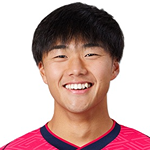
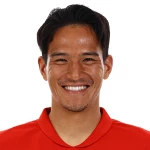
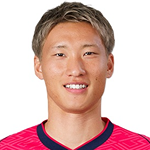
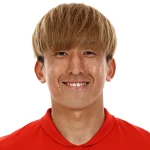



Cerezo Osaka

Urawa
More J-League Cup Matches
 Kashima

 Kashiwa Reysol

 Machida Zelvia
 Urawa
Cerezo Osaka Past Reports Recent Settled
Urawa Past Reports Recent Settled
This report was generated by an AI model before kickoff using the data package available at publication time. It is preserved unchanged after settlement as a permanent archive. Model outputs are statistical estimates, not guarantees.