
Vissel Kobe vs Nagoya Grampus Prediction: High-Press Asymmetry & Transition Flaws — xG Preview
- ▸Vissel Kobe capitalize on high-press turnovers to secure a competitive home win (Confidence: Moderate, Value: High)
- ▸Nagoya Grampus utilize possession control to hold Kobe to a 1:1 stalemate (Confidence: Moderate, Value: Moderate)
- ▸High-tempo transitions push total goals over the 2.5 line (Confidence: Moderate, Value: Moderate)
Vissel Kobe's undefeated home campaign and tactical dominance over Nagoya favor the hosts, with Home Win / Draw offering optimal coverage against schedule fatigue.
Matchup Intelligence & Head-to-Head
Season Benchmarks & Historical BattlesVissel Kobe Attack vs Defence Comparison Nagoya Grampus
Recent Head-to-Head Meetings
No recent head-to-head records found in archive.
At the heart of this contest lies whether Vissel Kobe's disciplined, high-intensity collective can breach Mihailo Petrović's expansive yet structurally fragile Nagoya Grampus backline. Taking place at Noevir Stadium Kobe in Round 13 of the J1 League, this clash carries significant table implications as fifth-place Kobe look to close the gap on the frontrunners, while eleventh-place Grampus fight to pull away from mid-table stagnation. Vissel Kobe enter on the back of an undefeated home record, conceding just 0.90 goals per match, yet they face the challenge of a compressed calendar following continental commitments. Nagoya Grampus arrive with five matches unbeaten across all competitions, underpinned by an elevated 57.0% possession rate. XG Mind AI synthesizes underlying performance data, tactical transition mechanics, and independent Poisson simulations to provide an authoritative, evidence-based preview of this compelling encounter.
📌 Vissel Kobe vs Nagoya Grampus: Match Intelligence Brief
- Fixture ID: 1556128
- Matchup: Vissel Kobe vs Nagoya Grampus
- Competition: J1 League, Round 13
- Kickoff Time: 2026-10-31 06:00 UTC
- Key Tactical Watchpoint: Can Vissel Kobe's high-turnover pressing trap dismantle Nagoya's build-up phase before fatigue sets in from midweek continental travel?
📊 1. Vissel Kobe Attacking Structure vs Nagoya Grampus Defensive Counter
⚔️ Head-to-Head History: Vissel Kobe's Dominance Over Grampus
Recent encounters between these two traditional Japanese sides have tilted heavily in favor of Vissel Kobe. Kobe have won their last three consecutive competitive meetings against Nagoya Grampus, consistently capitalizing on transitional chaos and set-piece superiority.
| Date | Competition | Home Team | Score (HT) | Away Team |
| 2026-04-11 | J1 League | Vissel Kobe | 3:2 (1:1) | Nagoya Grampus |
| 2026-03-14 | J1 League | Nagoya Grampus | 0:3 (0:1) | Vissel Kobe |
| 2025-06-15 | J1 League | Vissel Kobe | 2:1 (2:0) | Nagoya Grampus |
| 2025-02-22 | J1 League | Nagoya Grampus | 2:2 (0:0) | Vissel Kobe |
| 2024-07-20 | J1 League | Vissel Kobe | 3:3 (1:1) | Nagoya Grampus |
📈 Team Form & Tactical Style Breakdown: High-Intensity Direct Press vs Expansive Positional Possession
Home Team (Vissel Kobe): Managed by Michael Skibbe, Vissel Kobe operate with a distinct 4-1-2-3 / 4-3-3 shape centered on aggressive front-foot pressing, rapid vertical progression, and sustained box territorialization. Kobe currently occupy 5th position in the J1 League with 23 points from 12 matches (7 wins, 2 draws, 3 losses). Their underlying numbers reflect genuine championship caliber: an expected goals (xG) generation of 1.55 per match against an expected goals against (xGA) of 1.25 per match. Defensively, Kobe concede merely 0.90 actual goals per game, having kept 6 clean sheets in 12 league outings. Over their last six fixtures across all competitions, Kobe have collected four wins, one draw, and one defeat, highlighted by a 3-0 away dismantling of Fagiano Okayama and a crucial 1-0 continental triumph away against Daejeon Hana Citizen in the AFC Champions League Elite just four days ago. The primary attacking catalysts remain talismanic winger Yoshinori Muto, central attacker Daiju Sasaki, and dynamic midfielder Yosuke Ideguchi. Left-back Katsuya Nagato provides elite service from wide channels and dead-ball deliveries. Kobe's tactical identity thrives on suffocating opponents in their defensive third, generating an impressive 5.0 shots on target per match despite averaging an economical 51.2% possession. The chief tactical vulnerability stems from transitional spaces left behind marauding full-backs when their initial counter-press is bypassed.
Away Team (Nagoya Grampus): Under veteran tactician Mihailo Petrović, Nagoya Grampus have adopted an expansive 3-4-2-1 structure prioritizing numerical superiorities in central midfield, patient circulation, and wing-back overlaps. Grampus sit 11th in the table with 14 points (4 wins, 2 draws, 6 losses), scoring 14 goals while conceding 18. Despite their bottom-half standing, Grampus possess a robust 57.0% average possession rate, reflecting their technical preference to dictate game tempo. However, an underlying xGA of 1.42 per match and an actual concession rate of 1.50 goals per fixture underscore chronic defensive fragility, particularly against direct counter-attacks. Grampus have entered a stubborn phase of resilience, remaining unbeaten across their last five matches in all competitions (one win and four draws). Recent domestic results include three consecutive 1-1 stalemates against Urawa Red Diamonds in the J-League Cup, Yokohama F. Marinos in the league, and Cerezo Osaka, alongside an impressive 3-1 road victory over Kashiwa Reysol. Primary playmaker Yuya Yamagishi serves as the focal point in transition, supported by the tireless running of box-to-box midfielder Sho Inagaki and creative wide outlet Ryuji Izumi. While Nagoya dominate territorial possession, their vulnerability to turnovers in deep build-up areas has frequently exposed their three-man backline to rapid overload transitions.
🔍 Core Statistical Comparison: Kobe's Defensive Rigidity vs Grampus's Fragile Backline
| Metric | Vissel Kobe (Season) | Nagoya Grampus (Season) |
| Expected Goals (xG / match) | 1.55 | 1.30 |
| Expected Goals Against (xGA / match) | 1.25 | 1.42 |
| Average Possession (%) | 51.2% | 57.0% |
| Shots / match | 13.6 | 13.2 |
| Shots on Target / match | 5.0 | 4.6 |
| Corners Won / match | 4.4 | 4.8 |
⚠️ Key Absences & Squad Impact Assessment: No Verified Key Absences as Both Sides Feature Established Cores
A comprehensive review of official matchday disclosures and medical registers indicates no verified key absences for either Vissel Kobe or Nagoya Grampus heading into Round 13. Both managers retain access to their established starting cores. For Vissel Kobe, central defenders Matheus Thuler and Diego anchor the backline alongside midfielder Yosuke Ideguchi, while Yoshinori Muto and Daiju Sasaki spearhead the frontline. For Nagoya Grampus, captain Sho Inagaki commands the midfield pivot with Yuya Yamagishi and Ryuji Izumi driving the forward transitions. The primary personnel consideration is not structural injury absences but rotational management, particularly for Kobe following their grueling continental excursion to South Korea.
⚖️ Referee & Officiating Analysis: Koki Nagamine's Measured Whistle Controls Match Tempo
- Match Official: Koki Nagamine
- Officiating Tendency: Nagamine is recognized across the J.League circuit for a balanced, low-intervention officiating style, averaging approximately 2.80 yellow cards and 21.5 fouls per fixture. He demonstrates a relatively high threshold for contact in aerial duels and physical shoulder challenges.
- Tactical Repercussions: Nagamine's permissive approach to physical contact directly benefits Vissel Kobe's aggressive counter-pressing scheme. If Kobe can execute tactical disruption without facing early cautions, Nagoya's rhythm-oriented build-up play will struggle to achieve flow, resulting in broken play and contested midfield transitions.
🤔 2. The Battle for Control: Vissel Kobe Strengths vs Nagoya Grampus Threat
🟢 Arguments Supporting Vissel Kobe
- Impenetrable Home Foundation & Metric Superiority: Vissel Kobe remain undefeated at Noevir Stadium Kobe in the J1 League this campaign (3 wins, 2 draws), conceding merely 0.60 goals per game on home soil. Their net seasonal expected goal differential of +3.5 heavily outclasses Nagoya's -1.3 xG differential, indicating that Kobe's chances are both higher in volume and superior in quality.
- Targeted High-Press Exploitation of Petrović's Build-Up: Mihailo Petrović mandates that Nagoya play out from the back through central defenders and deep pivots. Vissel Kobe's front three of Muto, Sasaki, and Nagato excel in synchronized pressing triggers, forcing high turnovers inside the opposition half where Grampus concede an alarming 1.42 xGA per match.
- Head-to-Head Psychological Dominance: Kobe have defeated Nagoya in three consecutive competitive fixtures, including a 3-0 away rout at Toyota Stadium in March 2026 and a 3-2 victory at Noevir Stadium Kobe in April 2026. Kobe's tactical style has repeatedly proven to be the conceptual antidote to Nagoya's possession-heavy setup.
🔴 Arguments Opposing Vissel Kobe / Supporting Nagoya Grampus
- Continental Congestion & Energy Depreciation: Vissel Kobe endured a demanding trip to South Korea on Tuesday, October 27, battling to a 1-0 win against Daejeon Hana Citizen in the AFC Champions League Elite. Operating on fewer than four full days of physical recovery creates legitimate risk of late-game stamina drop-off against a well-rested Nagoya side.
- Nagoya's Five-Match Unbeaten Resilience: Nagoya Grampus enter this fixture on an encouraging five-game unbeaten run across all competitions (D-W-D-D-D). Their tactical cohesion under Petrović has solidified, demonstrated by resilient 1-1 draws against heavyweights Yokohama F. Marinos and Cerezo Osaka.
- Kobe's Historical Tendency for Low-Block Stalemates: Despite dominating shot counts, Kobe have occasionally struggled to dismantle compact mid-blocks, as witnessed in their recent 0-0 home stalemate against Machida Zelvia where they fired 15 attempts without converting. If Grampus absorb pressure effectively, the draw becomes a live danger.
Contextual & Motivational Risk Assessment
With Kobe sitting 5th on 23 points and trailing the league leaders by only four points, domestic urgency is at an all-time high. However, navigating dual domestic and continental campaigns inevitably splits mental and physical bandwidth. Nagoya Grampus sit in 11th with 14 points; Petrović's men are desperate to accumulate points to avoid drifting toward the lower third of the table. Their willingness to accept a draw will shape their second-half game management.
🧠 3. Algorithmic Modeling for Vissel Kobe vs Nagoya Grampus
- Analytical Modeling Deployed: Independent Poisson Expected-Goal Matrix + Blended xG/xGA Calibration Model.
- Model Quantitative Insights: The Poisson model establishes an expected goal value (lambda) of 1.485 for Vissel Kobe and 1.275 for Nagoya Grampus, yielding a combined match expectancy of 2.76 total goals. In full-time outcome densities, Vissel Kobe hold a 42.1% win probability, the Draw registers at 25.3%, and a Nagoya Grampus away victory stands at 32.6%. The probability of Both Teams to Score (BTTS) reaches 55.7%, reflecting Nagoya's consistent scoring record coupled with their leaky defense.
- Market Sentiment & Professional Consensus: International market metrics identify Vissel Kobe as the justifiable home favorite, with fair value win density hovering in the 1.85 to 1.95 range. However, sharp pricing models acknowledge Grampus's recent sequence of 1-1 draws, leading to heavy defensive liability management on the draw and 1X double-chance markets.
- Dynamic Line & Price Movement: Total goals lines sit firmly balanced between 2.25 and 2.50. Market volume exhibits steady backing for the Over 2.5 proposition, heavily influenced by the high-scoring head-to-head history where five of the previous six meetings produced three or more total goals.
🎯 4. The Decisive Take: Vissel Kobe vs Nagoya Grampus Tactical Outcome
🧭 Upset Risk Assessment: Vissel Kobe command superior seasonal fundamentals at Noevir Stadium Kobe, boasting an undefeated home record of three wins and two draws alongside a stingy 0.90 goals conceded per match. However, Kobe's baseline energy is taxed following a demanding continental journey to South Korea against Daejeon Hana Citizen just four days ago, which could diminish their second-half pressing intensity. Nagoya Grampus arrive on a five-match unbeaten run across all competitions and possess the technical possession retention to exploit transitional lulls through Yuya Yamagishi and Sho Inagaki. Ultimately, while Kobe's structural superiority should protect their home streak, Grampus's stubborn recent sequence of 1-1 draws suggests covering the stalemate is essential, hinging largely on Kobe's late-game physical stamina.
Final Strategic Synthesis
Weighing Vissel Kobe's baseline structural superiority against the acute physical fatigue of a 4-day continental turnaround, the optimal probabilistic trajectory is a competitive, high-tempo contest where Kobe maintain their unbeaten home status. Kobe's high-press directly punishes Nagoya's defensive lapses, but Grampus possess sufficient technical quality via Yamagishi to register on the scoresheet. Retaining both the decisive home win and the stalemate provides the most rigorous risk-adjusted posture.
- ⭐⭐ AI Confidence Rating: Moderate
🔑 4.1 Core Analytical Viewpoints
Following comprehensive synthesis across quantitative models and tactical intelligence, MatchMind AI identifies the core thesis below as the most balanced probabilistic trajectory for this encounter. All projections represent statistical estimates for research purposes, and readers are encouraged to evaluate tactical context independently.
- Primary Thesis (Core): Home Win / Draw (Compound selection covering Kobe's structural superiority as the primary script while hedging against schedule fatigue and Nagoya's draw momentum) (Confidence: Moderate, Value Index: High)
- Secondary Angle (Value): Over 2.5 Goals (Lambda total of 2.76 paired with Grampus's 1.42 xGA defensive vulnerability) (Confidence: Moderate, Value Index: Moderate)
- Contingency Angle (Hedge / Upset): 1:1 Correct Score Stalemate (Direct protection against Kobe's physical second-half regression) (Confidence: Moderate, Value Index: Moderate)
Strategic Summary: Vissel Kobe's undefeated home campaign and stylistic mastery over Nagoya Grampus justify their status as primary drivers of this contest. However, Nagoya's current five-match unbeaten run featuring three consecutive 1-1 domestic draws dictates that the draw must be formally incorporated into the primary thesis.
Core Recommendation: Back Vissel Kobe to remain unbeaten via Home Win / Draw, with the 2:1 home victory leading the tactical projections.
🔥 4.2 Total Goals & Over/Under 2.5 Projection
1️⃣ Primary Goal Count: 3 Goals (Model Probability: 22.2%)
- Tactical Deduction: A three-goal outcome represents the primary convergence between Kobe's attacking productivity and Nagoya's defensive instability. Vissel Kobe average 1.50 goals scored per match with an underlying 1.55 xG, while Nagoya Grampus surrender 1.50 goals per match on the road alongside an expansive 1.42 xGA. In transition, Nagoya's 57.0% possession regularly pulls their center-backs out of position, allowing Kobe's front three to exploit open corridors. Furthermore, Nagoya's technical quality guarantees counter-attacking opportunities, making a 2:1 match state the most logical three-goal outcome.
2️⃣ Secondary Goal Count: 2 Goals (Model Probability: 24.1%)
- Tactical Deduction: The two-goal threshold serves as the natural statistical fallback if fatigue slows Kobe's tempo. With Kobe playing their third high-intensity match in seven days, a reduced pressing volume would allow Nagoya to control possession at a pedestrian pace, naturally funneling the game into a competitive 1:1 stalemate or a controlled 2:0 Kobe victory.
3️⃣ Over / Under 2.5 Quantitative Deduction: Over 2.5 (Model/Market Supported)
- Tactical & Liquidity Rationale: The analytical matrix decisively endorses Over 2.5 goals based on a combined expected goals total of 2.76 (1.485 home lambda + 1.275 away lambda). While Kobe boast an impressive defensive record at home, Nagoya's defensive structure under Petrović consistently concedes high-quality central chances. Historically, this exact fixture has been a reliable source of goals, with the last five head-to-head meetings producing aggregate scorelines of 3-2, 0-3, 2-1, 2-2, and 3-3. Both teams possess decisive attacking catalysts capable of converting half-chances.
🥅 4.3 Final Scoreline Probability Matrix
1️⃣ Primary Projected Scoreline: 2:1 (Model Density: 8.9%)
- Matrix Reasoning: A 2:1 victory for Vissel Kobe perfectly encapsulates the fundamental dynamic of this fixture. Kobe's offensive potency at Noevir Stadium Kobe (1.50 goals per game) is primed to breach a Nagoya defense that has conceded 18 goals in 12 league games. Yoshinori Muto and Daiju Sasaki possess the physical edge to capitalize on crosses from Katsuya Nagato. Concurrently, Nagoya's technical attacking midfield will find space behind Kobe's pressing lines, allowing Yuya Yamagishi to breach Kobe's defensive perimeter at least once.
2️⃣ Secondary Projected Scoreline: 1:1 (Model Density: 12.0%)
- Matrix Reasoning: The 1:1 scoreline stands as the single highest individual density outcome in the independent Poisson simulation at 12.0%. It accounts directly for Kobe's travel fatigue following their midweek AFC Champions League Elite fixture in South Korea. If Kobe's counter-pressing drops off after the hour mark, Nagoya's possession dominance (57.0%) enables them to dictate terms and salvage a hard-fought draw, mirroring their recent 1-1 results against Urawa, Yokohama F. Marinos, and Cerezo Osaka.
⏳ 4.4 Half-Time / Full-Time Trend Probabilities
1️⃣ Primary Trend: Draw-Win (Model Probability: 33.3%)
- Script Reasoning: Vissel Kobe exhibit a pronounced second-half scoring bias, generating only 27.8% of their seasonal goals during the opening 45 minutes. Furthermore, in their five home league matches this season, four entered the half-time interval level (an 80% home HT draw rate). Nagoya Grampus will look to maintain deep defensive compactness early to frustrate the hosts. As the game opens in the second half, Skibbe's superior bench depth and direct vertical transitions will allow Kobe to strike decisively and secure all three points.
2️⃣ Secondary Trend: Draw-Draw (Model Probability: 25.0%)
- Script Reasoning: The Draw-Draw script directly reflects Nagoya's recent pattern of persistent stalemates. Grampus entered the break level and concluded level in two of their last three league outings. If Kobe's finishing falters as it did against Machida Zelvia (0-0), Nagoya will comfortably absorb pressure and protect a level scoreline throughout regulation time.
⏳ 4.5 Match Progression & Live Tactical Scripts
- Attacking & Defensive Tempo Fingerprint:
- Vissel Kobe Attacking Profile: Type B (Late Accelerators) — Kobe build pressure methodically, utilizing physical wearing down of opponents before executing high-intensity vertical attacks between the 60th and 85th minutes.
- Nagoya Grampus Defensive Vulnerability: Type E (Mid-Match Vulnerability) — Grampus frequently suffer lapses in concentration between the 45th and 70th minutes when transitioning from sustained possession to defensive recovery.
Part 1: Base Case Match Flow (Standard Trajectory)
- 0–30 Minutes: Nagoya establish early ball possession, circulating across their three central defenders. Kobe maintain a mid-to-high block, selectively triggering presses on wide passes to Grampus wing-backs. High duel volume in midfield keeps scoring chances limited.
- 30–60 Minutes: Kobe increase pressing intensity, forcing turnovers inside Nagoya's defensive third. Both teams trade opportunities, with Kobe capitalizing on a broken transition to break the deadlock before Grampus respond on a set-piece or counter-attack.
- 60–90 Minutes: Substitutions alter game dynamics. Kobe introduce fresh legs in wide channels, putting immense physical pressure on Nagoya's tiring backline. Kobe net a second goal around the 75th minute and manage the closing stages with structural discipline.
- 📊 Baseline Projections:
- Goal Expectancy Flow: 0.85 goals expected in the first half; 1.91 goals expected in the second half.
- Corner Trajectory: Steady volume, accumulating 4-5 corners per half.
Part 2: Tactical Contingency Plans (Strategic Deviations)
- Contingency Scenario 1: Frustrated Favorite (Scoreless at 65')
- Trigger Condition: Kobe fail to convert early chances, remaining 0-0 past the 65th minute.
- Tactical Deviation: Skibbe commits both full-backs forward, shifting into an ultra-aggressive 3-1-6 attacking structure. This spikes Kobe's box entries but leaves massive space for Nagoya's Yamagishi on the counter.
- Corner Volume Alert: Elevated (>11.5 corners).
- Contingency Scenario 2: Underdog Counter Strike (Nagoya Scores First)
- Trigger Condition: Grampus score on an isolated transition in the first half.
- Tactical Deviation: Nagoya immediately retreat into an ultra-compact 5-4-1 low block. Kobe abandon patient build-up in favor of direct aerial bombardment targeting Daiju Sasaki and Yoshinori Muto.
- Corner Volume Alert: Elevated (>12.0 corners).
🚩 4.6 Set-Piece Battle Preview
- Dead-Ball Threat Level: Elevated
- Tactical Breakdown: Set plays represent a major avenue of goal expectancy in this matchup. Vissel Kobe possess aerial dominance through central defenders Matheus Thuler and Diego, expertly serviced by Katsuya Nagato's wicked in-swinging deliveries. Nagoya Grampus have conceded four goals from defensive set-pieces this season due to occasional zonal miscommunication. Kobe hold a decided advantage in dead-ball efficiency.
🚩 4.7 Corner & Dead-Ball Dynamics Preview
- Corner Volume Expectation: Neutral (8.5–10.5)
- Tactical Rationale: Kobe average 4.4 corners won per match while Nagoya generate 4.8 corners won per match. Kobe's vertical crossing style will produce deflections off Nagoya's wing-backs, while Nagoya's patient probing in wide areas will generate complementary corner counts. A projected total between 9 and 10 corners aligns with seasonal metrics.
💬 Reader Engagement & Tactical Debate
Can Mihailo Petrović's expansive possession scheme finally unpick Vissel Kobe's physical press at Noevir Stadium Kobe, or will continental fatigue catch up with the hosts in the second half? Share your predicted scorelines and tactical talking points in the comments below!
❓ Frequently Asked Questions (FAQ)
Q1: What is the most probable outcome for Vissel Kobe vs Nagoya Grampus?
A: The most balanced probabilistic projection is a Vissel Kobe victory or draw (Home Win / Draw). Kobe are unbeaten at home in league play this season (3-2-0), but Nagoya's recent streak of five unbeaten games warrants hedging against the stalemate.
Q2: What are the primary projected scoreline and total goals outlook?
A: The primary projected scoreline is a 2:1 victory for Vissel Kobe, followed closely by a 1:1 stalemate. The total goals projection leans toward Over 2.5, supported by an aggregate expected goal value of 2.76.
Q3: What is the single biggest tactical x-factor or lineup absence in this match?
A: The decisive x-factor is Vissel Kobe's physical recovery following their midweek trip to South Korea in the AFC Champions League Elite. If Kobe's pressing drops off, Nagoya possess the technical midfield quality to control the tempo.
Q4: How do the advanced metrics (xG and form) compare to the market price?
A: While Kobe's 1.55 xG and +3.5 net seasonal xG differential justify their role as favorites, market pricing often underestimates Nagoya's recent defensive resilience (four draws in five games). Backing Home Win / Draw combined with Over 2.5 goals provides the optimal risk-adjusted value profile.
Key Players to Watch
 DF
 DF
 FW
 DF
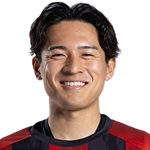 MF
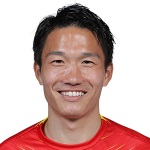 MF

Vissel Kobe

Nagoya Grampus
More J1 League Matches & Intelligence
 Kashima

 Mito Hollyhock

 Fagiano Okayama

 Kyoto Sanga

Vissel Kobe Past Reports Recent Settled Archive
Nagoya Grampus Past Reports Recent Settled Archive
This report was generated by an AI model before kickoff using the data package available at publication time. It is preserved unchanged after settlement as a permanent archive. Model outputs are statistical estimates, not guarantees.