
FC Tokyo vs Urawa Prediction & Match Analysis: High-Press Metrics Meet Porous Defense — Scoreline & xG Preview
- ▸FC Tokyo capitalizes on high turnovers to seal a 2:1 home victory (Confidence: Moderate, Value: High)
- ▸Open transitional flow breaches the total goal threshold for Over 2.5 Goals (Confidence: Moderate, Value: Moderate)
- ▸Late tactical overcommitment from Urawa yields a 3:1 victory for FC Tokyo (Confidence: Low, Value: Moderate)
FC Tokyo to exploit Urawa's porous defensive structure and secure an outright home victory in a high-tempo contest.
Matchup Intelligence & Head-to-Head
Season Benchmarks & Historical BattlesFC Tokyo Attack vs Defence Comparison Urawa
Recent Head-to-Head Meetings
No recent head-to-head records found in archive.
The J1 League regular season reaches Matchday 9 as FC Tokyo welcome Urawa to the Ajinomoto Stadium for an intensely poised metropolitan clash. At the heart of this contest lies a severe tactical contrast between structural defensive resilience and chaotic transitional volatility: the hosts arrive on the back of an immaculate five-match clean-sheet streak across all competitions, while the visitors possess an expansive, high-scoring attack undermined by a backline conceding 2.25 goals per contest. Tactical debate surrounds whether Urawa's progressive midfield playmakers can pierce Tokyo's suffocating 85th-percentile pressing block, or if Tokyo's ruthless transition triggers will dismantle an unstable visiting rearguard. Utilizing Poisson-based goal expectancies, positional threat metrics, and tactical game-state simulations, XG Mind AI deconstructs the underlying structural parameters to project the decisive pitch dynamics and probabilistic scoreline vectors.
📌 FC Tokyo vs Urawa: Match Intelligence Brief
- Fixture ID: 1556084
- Matchup: FC Tokyo vs Urawa
- Competition: J1 League, Regular Season - Round 9
- Kickoff Time: 2026-10-10 06:00 UTC
- Key Tactical Watchpoint: FC Tokyo's coordinated 85.0 high-press intensity confronting Urawa's fragile rest defense during defensive transition phases.
📊 1. FC Tokyo Attacking Structure vs Urawa Defensive Counter
⚔️ Head-to-Head History: Clean Slate in Current Analytical Sample
No official direct head-to-head records exist between the clubs within the recent standardized tracking sample for this competition window. Analytical evaluation focuses strictly on verified current-season form, tactical underlying data, and venue-specific metrics.
| Date | Competition | Home Team | Score (HT) | Away Team |
| N/A | J1 League | FC Tokyo | No recent verified meetings in sample | Urawa |
📈 Team Form & Tactical Style Breakdown: High-Press Stranglehold vs Transition Volatility
Home Team (FC Tokyo): Under extensive managerial stability across 616 days at the helm, FC Tokyo have crystallized into one of the most structurally disciplined outfits in Japanese football. The Gas Chemical side enter this fixture riding a flawless five-match winning streak across all competitions, remarkably conceding zero goals in that span following decisive victories over Shonan Bellmare (4:0), Ehime FC (2:0), Nagoya Grampus (1:0), Gamba Osaka (2:0), and Kyoto Sanga (2:0). Operating primarily out of an aggressive mid-to-high block registered at an 85.0 press rating and an 87.5 defensive actions intensity score, Tokyo funnel play wide before executing rapid vertical traps. Centre-forward Marcelo Ryan (OTI 69.0, OTI xG 84.6) and second striker Motoki Nagakura (OTI 65.6, overall score 87.4) spearhead an attack producing 1.85 xG per match. Defensive anchor Alexander Scholz (overall score 86.7, GIM 80.1) and holding midfielder Takahiro Ko (DII 82.6) consistently extinguish counter-attacks before opposing attacks penetrate the 18-yard box. Tokyo's defensive cohesion has held opponents to an elite 1.10 xGA per match, giving them a structural floor that few opponents can disrupt.
Away Team (Urawa): Urawa present a drastically divergent profile, operating under a relatively newly appointed managerial tenure of just 70 days. Their recent schedule has been a high-octane rollercoaster: four victories and one defeat over their last five competitive outings, featuring a chaotic 3:2 Emperor Cup win over Omiya Ardija, a 3:2 cup triumph over Kataller Toyama, and a 3:1 league victory over Tokyo Verdy, offset by a 1:2 home slip against Fagiano Okayama. While their offensive output is legitimately dangerous—averaging 2.00 actual goals and 1.53 xG per game thanks to the creative brilliance of Ryoma Watanabe (OTI 86.7, OTI xG 92.4) and forward Takuro Kaneko (OTI 56.1, GIM 61.9)—their defensive stability is alarming. Urawa have leaked an untenable 18 goals in 8 league matches (2.25 conceded per match), surrendering an average of 1.60 xGA. Their backline, anchored by Danilo Boza and Yota Miyamoto, repeatedly struggles with transition coverage when their aggressive full-backs push high. Against a side with Tokyo's clinical transitional execution, Urawa's defensive exposure represents an acute systemic vulnerability.
🔍 Core Statistical Comparison: Tokyo's Defensive Supremacy vs Urawa's Backline Deficit
| Metric | FC Tokyo (Season) | Urawa (Season) |
| Expected Goals (xG / match) | 1.85 | 1.53 |
| Expected Goals Against (xGA / match) | 1.10 | 1.60 |
| Average Goals Scored / match | 1.75 | 2.00 |
| Average Goals Conceded / match | 1.00 | 2.25 |
| Net Goal Differential / match | +0.75 | -0.25 |
| Set-Piece Goals Scored | 9 | 6 |
⚠️ Key Absences & Squad Impact Assessment: Both Squads Fully Available
Both managerial staffs enter Matchday 9 with enviable squad health metrics. The analytical medical feed confirms zero high-fatigue flags and zero confirmed injury absences across either roster. FC Tokyo have their core spine intact, with Alexander Scholz marshalling the central defense alongside Henrique Inamura, Takahiro Ko dominating midfield duels, and Motoki Nagakura partnering Marcelo Ryan. Urawa similarly travel with a full roster, allowing playmakers Matheus Sávio, Samuel Gustafson, and Ryoma Watanabe to operate in creative support behind Takuro Kaneko and Hiroto Komori. Tactical execution will be determined by systematic setup rather than attrition.
🔬 Advanced Metrics Comparison: Offensive Creation Meets Defensive Discrepancy
| Tactical Dimension | FC Tokyo | Urawa | Comparative Edge |
| Forward Threat Index (FW-OTI) | 67.3 | 52.1 | FC Tokyo holds superior frontline finishing gravity |
| Defensive Involvement (DF-DII) | 50.4 | 56.1 | Urawa defenders absorb higher raw defensive action volume |
| Defensive Quality (xGA / match) | 1.10 | 1.60 | FC Tokyo holds dominant structural prevention edge |
| Midfield Playmaking (MF-OTI) | 42.7 | 59.6 | Urawa possesses higher technical creative threat in central zones |
| Key Player Influence (Top GIM) | 80.1 (Scholz) | 61.9 (Kaneko) | FC Tokyo's defensive leader exerts greater net match control |
| Adjusted Squad Form Rating | 7.0 | 6.7 | FC Tokyo maintains slight overall baseline efficiency advantage |
| Set-Piece Threat (Goals Logged) | 9 | 6 | FC Tokyo generates superior aerial and dead-ball conversion |
| Recent Clean Sheet Run | 5 Consecutive | 1 in Last 5 | FC Tokyo exhibits vastly superior goal-prevention stability |
Penetration & Matchup Analysis:
The spatial dynamic reveals an acute mismatch down the flanks and through central transitions. While Urawa's MF-OTI edge (59.6 vs 42.7) driven by Ryoma Watanabe indicates superior ball progression through the middle third, FC Tokyo's forward threat (FW-OTI 67.3) directly targets Urawa's vulnerable 1.60 xGA defense. When Urawa commit numbers forward in positional attack, Tokyo's defensive unit—led by Takahiro Ko's 82.6 DII—triggers immediate turnovers, releasing Marcelo Ryan into isolated 1v1 situations against Danilo Boza.
⚖️ Referee & Officiating Analysis: Match Official Pending Confirmation
- Match Official: To be announced by the JFA referee committee.
- Officiating Tendency: Standard J1 League officiating guidelines prioritize game flow, typically averaging between 2.8 and 3.4 cautions per match with a moderate foul threshold in transition situations.
- Tactical Repercussions: FC Tokyo's 85.0 high-press intensity relies on aggressive counter-pressing within 5 seconds of turnover. A lenient official will favor Tokyo's physical containment of Matheus Sávio and Samuel Gustafson, while a strict whistle would elevate Tokyo's dead-ball opportunities, where they have already converted 9 set-piece goals this campaign.
🤔 2. Can Urawa Disrupt FC Tokyo? Dual Perspective
🟢 Arguments Supporting FC Tokyo
- Impenetrable Defensive Framework: FC Tokyo have posted 5 consecutive clean sheets across all competitions, restricting opponents to an exceptional 1.10 xGA per game in league action while displaying unmatched spatial compactness.
- Severe Transitional Exploitation: Urawa have conceded 18 goals in 8 league matches (2.25 per game). Tokyo's rapid attacking unit, propelled by Marcelo Ryan (OTI xG 84.6) and Motoki Nagakura, matches up perfectly against Urawa's high defensive line.
- Coaching Continuity and Tactical Cohesion: Tokyo's manager has overseen 616 days of systemic conditioning compared to just 70 days for Urawa's coaching setup, giving the hosts clear superiority in automated pressing triggers and defensive set-piece organization.
🔴 Arguments Opposing FC Tokyo / Supporting Urawa
- Potent Visiting Attacking Output: Despite defensive leaks, Urawa average 2.00 goals scored per match in league play, spearheaded by creative spark Ryoma Watanabe (OTI 86.7) and forward Takuro Kaneko.
- Midfield Technical Advantage: Urawa's midfield playmaking rating (MF-OTI 59.6) surpasses Tokyo's (42.7), providing the technical precision necessary to bypass Tokyo's initial high-press line through Samuel Gustafson and Matheus Sávio.
- Shared Physical Fatigue: Both squads competed in mid-week Emperor Cup fixtures on October 7, leaving both teams with identical ~68 to 69 hours of recovery time. If physical fatigue diminishes Tokyo's pressing energy, Urawa's technical ball-retention could establish sustained territory.
Contextual & Motivational Risk Assessment
Both sides enter this encounter on short turnarounds following October 7 domestic cup commitments, yet squad rotation in those fixtures allowed core assets to maintain relative sharpness. Sitting in 5th place on 17 points, FC Tokyo possess an immediate pathway into the AFC qualification spots with a victory at Ajinomoto Stadium. Urawa sit 10th on 12 points without a single draw all season (4 wins, 4 losses), demonstrating an all-or-nothing tactical identity that inherently generates open, high-variance match environments.
🧠 3. Algorithmic Modeling for FC Tokyo vs Urawa
- Analytical Modeling Deployed: Independent Poisson Expected-Goal Matrix cross-referenced against decayed exponential form metrics and tactical efficiency ratings.
- Model Quantitative Insights: The baseline mathematical distribution sets expected lambda parameters at lambda_home = 2.00 and lambda_away = 1.50, generating a combined total goal expectancy of lambda_total = 3.50 with a net superiority of lambda_diff = +0.50 for FC Tokyo. The Poisson distribution assigns FC Tokyo a 49.4% probability of securing an outright home victory, with a draw modeled at 21.6% and an away victory at 29.0%. Both Teams to Score (BTTS) probability converges at an elevated 67.2%, reflecting Urawa's potent scoring record against their pronounced defensive frailties.
- Market Sentiment & Professional Consensus: Quantitative baselines position FC Tokyo as firm home favorites. The broader market consensus acknowledges Tokyo's defensive resilience but continues to respect Urawa's individual attacking firepower, creating sharp alignment around high-tempo, multi-goal game scripts.
- Dynamic Line & Price Movement: Total goal expectancies sit anchored above the median due to Urawa's season-long statistical profile (4.25 total match goals per game). Model indicators show solid resistance against a low-scoring stalemate, directing primary analytical density toward over-totals and multi-goal scorelines.
🎯 4. The Decisive Take: FC Tokyo vs Urawa Tactical Outcome
Final Strategic Synthesis
Under the rigorous standards of the Risk-First Doctrine, FC Tokyo emerge with the far superior balance of probabilities. While Urawa possess individual playmakers capable of scoring against any defense in the league, their structural vulnerability in defensive transitions—conceding 2.25 goals per match—is fatal against a Tokyo side operating with pristine tactical cohesion and riding a five-match winning run. Tokyo's high-press (85.0 intensity) will continually disrupt Urawa's build-up play, forcing high turnovers that convert into high-probability scoring chances.
- ⭐⭐ AI Confidence Rating: Moderate
🔑 4.1 Core Analytical Viewpoints
Strategic Opening Context:
Following comprehensive synthesis across quantitative models and tactical intelligence, MatchMind AI identifies the core thesis below as the most balanced probabilistic trajectory for this encounter. All projections represent statistical estimates for research purposes, and readers are encouraged to evaluate tactical context independently.
- Primary Thesis (Core): FC Tokyo to secure victory (Home Win) by capitalizing on Urawa's fragile rest defense while generating decisive chances through their cohesive forward line. (Confidence: Moderate, Value Index: High)
- Secondary Angle (Value): Over 2.5 Total Goals as Urawa's potent attack breaches Tokyo's backline once, but concedes multiple goals on the counter. (Confidence: Moderate, Value Index: Moderate)
- Contingency Angle (Hedge / Upset): A high-scoring transitional contest where Tokyo's pressing volume pushes the scoreline into a multi-goal cushion. (Confidence: Low, Value Index: Moderate)
Strategic Summary: FC Tokyo's structural elite defense (1.10 xGA) and pressing continuity under long-term coaching stability give them the tactical tools to exploit Urawa's porous backline (1.60 xGA, 2.25 actual conceded).
Core Recommendation: Primary backing on FC Tokyo to claim all three points in regular time.
🔥 High-Volatility Alert (Model Anomaly Triggered): The Poisson-derived goal expectancy parameters register a combined lambda of 3.50 goals (lambda_home 2.00, lambda_away 1.50), reflecting Urawa's extreme 4.25 season match goal average and pointing toward substantial in-game scoring volatility.
🔥 4.2 Total Goals & Over/Under 2.5 Projection
1️⃣ Primary Goal Count: 3 Goals (Model Probability: 21.6%)
- Tactical Deduction: A total of three goals represents the exact convergence of FC Tokyo's home attacking output (1.85 xG per match) and Urawa's open, high-variance approach. Urawa's frontline features high-caliber creators like Ryoma Watanabe and Takuro Kaneko who possess the individual quality to finally end Tokyo's five-game clean sheet streak. However, Urawa's insistence on committing numbers forward will inevitably leave spaces for Tokyo's transitional duo of Marcelo Ryan and Motoki Nagakura to score at least twice.
2️⃣ Secondary Goal Count: 4 Goals (Model Probability: 18.9%)
- Tactical Deduction: Should the game state open early via an initial 20-minute strike from either side, Urawa's structural discipline completely disintegrates as seen in recent 3:2 fixtures against Kataller Toyama and Omiya Ardija. In this scenario, Tokyo's counter-attack finds vast expanses of open green turf, pushing the match total to four goals.
3️⃣ Over / Under 2.5 Quantitative Deduction: Over 2.5 (Model/Market Supported)
- Tactical & Liquidity Rationale: Model outputs firmly support the Over 2.5 outcome based on a total goal lambda of 3.50 and a modeled 67.2% BTTS probability. Urawa's eight league fixtures this season have produced an extraordinary 34 total goals (4.25 per match), breaching the 2.5 threshold with extreme regularity. Even against Tokyo's formidable defense, Urawa's defensive porosity guarantees that Tokyo will receive multiple golden opportunities inside the 18-yard box, comfortably driving the contest past the 2.5 goal line.
🥅 4.3 Final Scoreline Probability Matrix
1️⃣ Primary Projected Scoreline: 2:1 (Model Density: 9.1%)
- Matrix Reasoning: A 2:1 victory for FC Tokyo represents the optimal intersection between home attacking efficiency and away defensive concession. Tokyo create 1.85 xG per match and face a defense that concedes 2.25 actual goals per game, establishing two home goals as the baseline projection. Urawa's attack averages 2.00 goals per game, creating enough box entries for Watanabe or Kaneko to grab one consolation or equalizer, but Tokyo's defensive organization under Scholz ultimately preserves the 2:1 margin.
2️⃣ Secondary Projected Scoreline: 3:1 (Model Density: 6.0%)
- Matrix Reasoning: The secondary scoreline reflects a game state where Urawa, trailing 2:1 past the 70th minute, overcommit in search of a leveler. Tokyo's lethal transition machinery exploits the vacated spaces behind Urawa's advancing full-backs to bury a decisive third goal on the break, consolidating a comprehensive 3:1 victory.
⏳ 4.4 Half-Time / Full-Time Trend Probabilities
1️⃣ Primary Trend: Draw-Win (Model Probability: 27.5%)
- Script Reasoning: Both teams entering on short turnarounds following mid-week cup games will lead to an initial tactical probing phase. Urawa will maintain decent possession through central midfield during the opening 40 minutes, entering the interval on level terms (0:0 or 1:1). As physical fatigue sets in during the second half, Tokyo's superior bench depth, conditioning, and pressing stamina will tilt the contest decisively in the hosts' favor after the 60th minute.
2️⃣ Secondary Trend: Win-Win (Model Probability: 24.8%)
- Script Reasoning: Tokyo execute an aggressive opening barrage utilizing their 85.0 high-press intensity to force an early turnover from Urawa's unsettled backline, converting inside the first 25 minutes and defending their advantage through both halves.
⏳ 4.5 Match Progression & Live Tactical Scripts
- Attacking & Defensive Tempo Fingerprint:
- FC Tokyo Attacking Profile: Type D (Sustained 90-min Pressure) — Methodical pressing triggers and relentless transitional running maintained across both halves.
- Urawa Defensive Vulnerability: Type E (Mid-Match Vulnerability) — Chronic structural disorientation when transitioning from offensive possession to defensive rest defense.
Part 1: Base Case Match Flow (Standard Trajectory)
- 0–30 Minutes: High physical intensity with Tokyo establishing a territorial squeeze in Urawa's defensive half. Urawa attempt to bypass the press through Samuel Gustafson's diagonal distribution.
- 30–60 Minutes: Tactical recalibration at the break. Tokyo step up the tempo down the flanks, forcing Urawa's full-backs deep and capitalizing on broken defensive structures to notch the go-ahead goal.
- 60–90 Minutes: Substitutions introduce fresh legs for Tokyo's attack. Urawa push numbers forward, generating moments of chaos in Tokyo's box but repeatedly getting caught on devastating counter-attacks.
- 📊 Baseline Projections:
- Goal Expectancy Flow: 1.1 goals in the first half; 2.4 goals in the second half.
- Corner Trajectory: Steady accumulation averaging 1 corner every 9 minutes.
Part 2: Tactical Contingency Plans (Strategic Deviations)
- Contingency Scenario 1: Frustrated Favorite
- Trigger Condition: Match remains 0:0 at the 60-minute mark despite Tokyo recording >1.30 xG.
- Tactical Deviation: Tokyo introduce direct wide attackers like Soma Anzai and Keita Endo, shifting to aggressive wing-crossing and set-piece overloads.
- Corner Volume Alert: Elevated (>11.5 corners).
- Contingency Scenario 2: Early Blitz & Chill
- Trigger Condition: Tokyo score two goals inside the opening 25 minutes via high-press turnovers.
- Tactical Deviation: Tokyo retreat into an impenetrable mid-block, absorbing Urawa possession and killing game tempo.
- Corner Volume Alert: Low (<8.5 corners).
🚩 4.6 Set-Piece Battle Preview
- Dead-Ball Threat Level: Elevated
- Tactical Breakdown: FC Tokyo are an established aerial juggernaut, having already registered 9 set-piece goals this season. With Alexander Scholz (GIM 80.1) and Marcelo Ryan targeting Urawa's zonally unstable marking scheme, Tokyo hold a substantial dead-ball edge.
🚩 4.7 Corner & Dead-Ball Dynamics Preview
- Corner Volume Expectation: Neutral (8.5–10.5)
- Tactical Rationale: Tokyo's vertical transition patterns produce direct shots and deflections rather than prolonged wing-crossing sequences, while Urawa's inverted wingers tend to cut inside, keeping corner volume within the median 9 to 10 range.
💬 Reader Engagement & Tactical Debate
Can Urawa's gifted midfield creators find a way to breach FC Tokyo's streak of five consecutive clean sheets, or will Tokyo's relentless pressing traps expose Urawa's leaky backline once again? Share your scoreline predictions and tactical thoughts in the comments below.
❓ Frequently Asked Questions (FAQ)
Q1: What is the most probable outcome for FC Tokyo vs Urawa?
A: FC Tokyo to win (Home Win) is the primary projected outcome, supported by a 49.4% Poisson model probability, an immaculate five-match clean-sheet winning streak, and an elite defensive baseline (1.10 xGA) confronting Urawa's porous backline (2.25 goals conceded per match).
Q2: What are the primary projected scoreline and total goals outlook?
A: The primary projected scoreline is 2:1 in favor of FC Tokyo, with 3:1 serving as the secondary vector. The total goals outlook is firmly oriented toward Over 2.5, driven by a high combined goal expectancy lambda of 3.50.
Q3: What is the single biggest tactical x-factor or lineup absence in this match?
A: The decisive x-factor is the battle between FC Tokyo's 85.0-rated high press and Urawa's rest defense during transitions. With both squads fully fit and reporting zero major injury absences, Urawa's ability to protect their center-backs when losing possession will dictate the match.
Q4: How do the advanced metrics (xG and form) compare to the market price?
A: Underlying metrics demonstrate that while Urawa score consistently (2.00 goals per game), their defensive concessions (1.60 xGA, 18 goals conceded in 8 games) make them structurally unviable against a balanced, disciplined opponent like FC Tokyo, creating strong value on the home victory.
Key Players to Watch


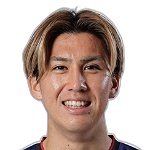




FC Tokyo

Urawa
More J1 League Matches & Intelligence
 Avispa Fukuoka

 Cerezo Osaka

 Kashiwa Reysol

 Kashima

FC Tokyo Past Reports Recent Settled Archive
Urawa Past Reports Recent Settled Archive
This report was generated by an AI model before kickoff using the data package available at publication time. It is preserved unchanged after settlement as a permanent archive. Model outputs are statistical estimates, not guarantees.