
South Korea vs Uzbekistan Prediction & Match Analysis: Can Korea Break Central Block? — Scoreline & xG Preview
- ▸South Korea control territory and secure a narrow 1:0 victory via second-half attrition (Confidence: Moderate, Value: Moderate)
- ▸Uzbekistan absorb pressure and capitalize on transitional counter for a 1:1 draw (Confidence: Moderate, Value: High)
- ▸Defensive attrition locks the contest into an Under 2.5 goal environment (Confidence: High, Value: Moderate)
South Korea possess the defensive structure and individual quality to control proceedings, favoring a disciplined low-scoring Home Win or Draw.
Matchup Intelligence & Head-to-Head
Season Benchmarks & Historical BattlesSouth Korea Attack vs Defence Comparison Uzbekistan
Recent Head-to-Head Meetings
No recent head-to-head records found in archive.
Staged at the Seoul World Cup Stadium under the banner of international autumn friendlies, South Korea host Uzbekistan in a fixture that pits East Asian technical authority against Central Asian transitional power. At the heart of this contest lies a fundamental tactical question: can the Taegeuk Warriors overcome their documented chance-conversion slump against a defensive block anchored by French Ligue 1 talent, or will Uzbekistan's recent scoring surge translate against elite continental opposition? South Korea enter this clash navigating a brief four-day turnaround following a scoreless stalemate against Venezuela, while Uzbekistan arrive buoyed by successive multi-goal victories over West Asian rivals. Utilizing multi-layered expected-goals metrics, tactical player tracking, and probabilistic modeling, XG Mind AI deconstructs the systemic levers, transition traps, and scoreline expectancies shaping this international test.
📌 South Korea vs Uzbekistan: Match Intelligence Brief
- Fixture ID: 1629005
- Matchup: South Korea vs Uzbekistan
- Competition: International Friendlies (Autumn Window)
- Kickoff Time: 2026-10-06 11:00 UTC
- Key Tactical Watchpoint: South Korea's ability to unlock Uzbekistan's central low block without exposing their rest defense to direct transitional counters led by Eldor Shomurodov.
📊 1. South Korea Attacking Structure vs Uzbekistan Defensive Counter
⚔️ Head-to-Head History: Continental Superiority Meets New Generational Parity
No official head-to-head fixtures have been recorded between these national selections within the current competitive cycle. Historically, South Korea have commanded the broader rivalry in AFC qualification tournaments, but Uzbekistan's contemporary golden generation—sparked by Olympic qualification and back-to-back youth-level continental honors—presents an entirely different physical and technical baseline than previous iterations.
| Date | Competition | Home Team | Score (HT) | Away Team |
| 2026-10-06 | International Friendly | South Korea | Head-to-Head Baseline Pending | Uzbekistan |
📈 Team Form & Tactical Style Breakdown: Possession Control vs Direct Counter-Surge
Home Team (South Korea): Under head coach Hong Myung-Bo, the Taegeuk Warriors exhibit a possession-heavy territorial structure, utilizing short combinations through the half-spaces to generate box entries. Across their last three friendly fixtures, South Korea posted an expected goals average of 1.37 xG per match while limiting opponents to an impressive 0.84 xGA per match. However, results have fluctuated wildly: a commanding 3:0 victory over Ecuador was followed by a 1:4 transitional collapse against Uruguay and a frustrated 0:0 draw with Venezuela on October 2. South Korea's structural vulnerability stems from a severe chance conversion deficit, highlighted by a staggering 75.0% big chance waste ratio in recent outings. Captain Son Heung-Min (Forward Threat Index: 81.7) remains the undisputed offensive focal point alongside playmakers Lee Kang-In and Hwang In-Beom. With Kim Min-Jae (Defensive Involvement Index: 58.5) commanding the backline, South Korea rarely concede sustained territorial pressure, yet their rest defense remains exposed whenever wing-backs push high into inverted crossing positions.
Away Team (Uzbekistan): Managed by Srecko Katanec, the White Wolves have embraced a pragmatic, highly structured 5-3-2 tactical blueprint designed to absorb pressure and strike decisively through direct transitions. Uzbekistan enter this clash on the back of impressive domestic autumn friendly displays, defeating Iran 3:1 on September 24 and Syria 4:1 on October 1. Nevertheless, contextual scrutiny is imperative: during high-caliber international tournament fixtures in June, Uzbekistan suffered heavy defensive breaches, falling 1:3 to Colombia, 0:5 to Portugal, and 1:3 to DR Congo. Uzbekistan's strategic viability hinges on the explosive transitional link between playmaker Abbosbek Fayzullaev and veteran talisman Eldor Shomurodov. Defensively, RC Lens center-back Abdukodir Khusanov provides elite recovery pace, allowing Uzbekistan to maintain a compact low block. Despite generating a modest 0.47 xG per match against tier-one opposition, their calculated finishing efficiency in Asian friendly encounters proves they can punish minimal lapses in concentration.
🔍 Core Statistical Comparison: Structural Baseline vs Finishing Variance
| Metric | South Korea (Season) | Uzbekistan (Season) |
| Expected Goals (xG / match) | 1.37 | 0.47 |
| Expected Goals Against (xGA / match) | 0.84 | 1.40 |
| Average Possession (%) | 58.4% | 43.1% |
| Shots / match | 13.8 | 8.2 |
| Shots on Target / match | 4.6 | 3.1 |
| Corners Won / match | 5.8 | 3.4 |
⚠️ Key Absences & Squad Impact Assessment: Both Squads Fully Available
Both national associations confirmed full-strength training contingents for this international window, providing both managers with unhindered tactical flexibility.
- South Korea: No confirmed injuries or disciplinary suspensions. Primary European stars Kim Min-Jae, Son Heung-Min, Hwang Hee-Chan, and Lee Kang-In reported without physical limitations, though slight rotational adjustments are expected following the 90-minute physical battle against Venezuela four days prior.
- Uzbekistan: Full selection availability. Central pillars Abdukodir Khusanov, Otabek Shukurov, Abbosbek Fayzullaev, and captain Eldor Shomurodov completed all training sessions without complication.
🔬 Advanced Metrics Comparison: Technical Mastery Confronts Physical Resilience
| Tactical Dimension | South Korea | Uzbekistan | Comparative Edge |
| Forward Threat Index (FW-OTI) | 54.4 | 42.1 | South Korea (+12.3 via elite European finishing options) |
| Defensive Involvement (DF-DII) | 61.8 | 68.4 | Uzbekistan (+6.6 higher defensive clearance and duel volume) |
| Defensive Quality (xGA / match) | 0.84 | 1.40 | South Korea (Superior spatial prevention by 0.56 xGA) |
| Midfield Playmaking (MF-OTI) | 56.1 | 44.8 | South Korea (+11.3 progressive passing dominance) |
| Key Player Influence (Top GIM) | 79.3 (Son Heung-Min) | 64.2 (E. Shomurodov) | South Korea (+15.1 individual decisive rating) |
| Adjusted Squad Form Rating | 6.90 | 6.45 | South Korea (+0.45 technical rating delta) |
| Clean Sheet Frequency (%) | 33.3% | 0.0% | South Korea holds superior organizational ceiling |
| Big Chance Waste Rate (%) | 75.0% | 0.0% | Uzbekistan holds superior recent finishing efficiency |
Penetration & Matchup Analysis:
South Korea hold a decisive technical advantage in half-space territorial penetration, evidenced by an MF-OTI score of 56.1 driven by Hwang In-Beom and Seol Young-Woo. However, Uzbekistan's elevated DF-DII output (68.4) underscores their comfort in absorbing high defensive volumes within their defensive third. Khusanov's aerial capability directly neutralizes South Korea's crossing patterns, demanding that the hosts generate centrally threaded combinations rather than speculative aerial deliveries.
⚖️ Referee & Officiating Analysis: Match Official Pending Confirmation
- Match Official: Neutral AFC Official to be announced.
- Officiating Tendency: Standard international friendly officiating protocols apply, characterized by moderate foul tolerance thresholds, low card frequencies, and proactive management to avoid severe physical friction in non-competitive fixtures.
- Tactical Repercussions: A lenient disciplinary threshold enables Uzbekistan's central midfield trio of Shukurov, Hamrobekov, and Mozgovoy to break Korean transitional rhythms through tactical fouls in the middle third without immediate risk of disciplinary accumulation.
🤔 2. Can Uzbekistan Disrupt South Korea? Dual Perspective
🟢 Arguments Supporting South Korea
- Elite Spatial Suppression and xGA Edge: South Korea's underlying defensive framework concedes just 0.84 xGA per game, anchored by Kim Min-Jae's elite anticipation and aerial dominance, severely restricting Uzbekistan's central avenue into the box.
- Individual Match-Winning Quality: Son Heung-Min's exceptional individual metrics (81.7 OTI, 79.3 GIM) provide an overwhelming qualitative advantage capable of breaking low blocks via isolated individual brilliance or set-piece execution.
- Territorial Asymmetry and Elo Hegemony: A 92-point Elo gap (1723 vs 1631) reflects a substantial structural disparity across the pitch, giving South Korea an expected points index of 0.718 and commanding sustained home pitch advantages in Seoul.
🔴 Arguments Opposing South Korea / Supporting Uzbekistan
- Alarming Chance Conversion Paralysis: South Korea's 75.0% big chance waste ratio and recent 0:0 stalemate against Venezuela prove their vulnerability to sterile possession when facing disciplined, low-block defensive structures.
- Rest Asymmetry and Squad Fatigue: Uzbekistan enter with 117 hours of recovery (4.9 days) and only two fixtures across the previous fortnight, whereas South Korea operate on 96 hours of rest following three intense matches in 14 days.
- Uzbekistan's Counter-Attacking Momentum: The White Wolves arrive having notched seven goals across their last two games (4:1 vs Syria, 3:1 vs Iran), indicating that Shomurodov and Fayzullaev are operating in peak synergistic rhythm.
Contextual & Motivational Risk Assessment
Given the non-competitive friendly designation, second-half tactical rotations represent a substantial disruptive variable. Hong Myung-Bo is widely anticipated to experiment with bench personnel such as Bae Jun-Ho, Cho Wi-Je, and Lee Han-Beom after the 60-minute mark to assess squad depth. Consequently, any dominant first-half territorial rhythm could decelerate into a disjointed tempo in the latter stages of the match.
🧠 3. Quantitative Modeling & Market Flow Deconstruction
- Analytical Modeling Deployed: Independent Poisson Expected-Goal Matrix coupled with Squad-Health Adjusted Lambda Distribution.
- Model Quantitative Insights: South Korea's attacking lambda sits at 1.20, constrained by recent finishing variance despite elevated possession metrics, while Uzbekistan's defensive profile yields an away expectancy of 1.05. The model identifies a concentrated probability cluster in low-scoring scripts, projecting a 60.9% likelihood of Under 2.5 total match goals.
- Market Sentiment & Professional Consensus: Professional syndicates reflect an underlying respect for South Korea's baseline quality, but price resistance has surfaced due to Korea's consecutive low-scoring displays against South American opposition. Market consensus heavily compresses the goal line toward Under 2.5, matching analytical expectations of a restrained contest.
- Dynamic Line & Price Movement: Early liquidity indicates steady consolidation around low-total bands. Asian goal totals have nudged downwards from 2.5 to 2.25 flat, reflecting sharp recognition of South Korea's short turnaround time and potential second-half personnel rotation.
🎯 4. Strategic Synthesis & Expected Pitch Dynamics
Final Strategic Synthesis
Under the Risk-First Framework, South Korea represent the structurally superior side across all primary technical indicators: Elo supremacy (+92 points), defensive suppression (0.84 xGA vs 1.40 xGA), and world-class individual disparity spearheaded by Son Heung-Min and Kim Min-Jae. However, complete tactical realism dictates acknowledging South Korea's chronic conversion inefficiency (0 goals from 1.62 xG against Venezuela) and short four-day rest turnaround. Uzbekistan possess the tactical discipline and defensive physicality through Khusanov to keep margins tight, but lack the sustained territory to engineer an outright away victory in Seoul. The decisive path therefore synthesizes around a tightly contested Korean victory, with a resilient low-scoring draw preserved as a mandatory secondary script.
- ⭐⭐ AI Confidence Rating: Moderate
🔑 4.1 Core Analytical Viewpoints
Following rigorous probabilistic modeling and tactical reconciliation, XG Mind AI establishes South Korea's territorial control and defensive stability as the foundational pillar, navigating through an inevitable low-margin contest.
- Primary Thesis (Core): Home Win / Draw — South Korea command the defensive baseline and qualitative edge to avoid defeat, but their chance conversion deficits make double-chance coverage mathematically optimal against an organized Uzbek low block. (Confidence: Moderate, Value Index: High)
- Secondary Angle (Value): Under 2.5 Total Goals — Model simulations project a combined lambda of 2.25, heavily favoring a disciplined, defensive encounter. (Confidence: High, Value Index: Moderate)
- Contingency Angle (Hedge / Upset): 1:1 Stalemate — Triggered if Uzbekistan score on an isolated counter-attack before South Korea can convert their territorial dominance. (Confidence: Moderate, Value Index: High)
Strategic Summary: Backing South Korea with draw inclusion provides complete systemic insulation against finishing variance and friendly rotation, perfectly aligned with South Korea's dominant 0.84 xGA prevention profile.
Core Recommendation: Primary support rests on South Korea navigating a tight, defense-led contest without succumbing to an outright upset.
🔥 4.2 Total Goals & Over/Under 2.5 Projection
1️⃣ Primary Goal Count: 2 Goals (Model Probability: 26.7%)
- Tactical Deduction: A two-goal match represents the natural intersection of South Korea's baseline 1.20 lambda output and Uzbekistan's counter-attacking potential. Either an efficient 2:0 home victory or a balanced 1:1 stalemate satisfies this score bracket, capturing the prevailing game state where South Korea struggle to pull away completely due to conservative friendly game-management and tactical substitutions after the 65th minute.
2️⃣ Secondary Goal Count: 1 Goal (Model Probability: 23.7%)
- Tactical Deduction: An alternative scenario driven by defensive attrition, where Kim Min-Jae completely neutralizes Shomurodov while Uzbekistan's 5-3-2 block forces South Korea into low-percentage perimeter shots, producing a solitary, hard-fought 1:0 Korean breakthrough.
3️⃣ Over / Under 2.5 Quantitative Deduction: Under 2.5 (Model/Market Supported)
- Tactical & Liquidity Rationale: The combined statistical expectation of 2.25 goals, paired with South Korea's solid 0.84 xGA defensive record and their 75.0% big chance waste ratio, points toward a game with limited goals. Neither side possesses the tactical incentive in a friendly setting to pursue chaotic end-to-end exchanges. Market liquidity confirms heavy downward pressure on the 2.5 ceiling.
🥅 4.3 Final Scoreline Probability Matrix
1️⃣ Primary Projected Scoreline: 1:0 (Model Density: 12.6%)
- Matrix Reasoning: The 1:0 scoreline perfectly encapsulates South Korea's tactical profile: overwhelming territorial dominance (58%+ possession) yielding a singular decisive breakthrough via Son Heung-Min or Lee Kang-In, followed by professional game-state preservation anchored by Kim Min-Jae to protect an unblemished clean sheet.
2️⃣ Secondary Projected Scoreline: 1:1 (Model Density: 13.3%)
- Matrix Reasoning: The secondary scoreline accounts for South Korea's finishing variance. If the hosts fail to capitalize on early chances, a transitional counter spearheaded by Fayzullaev slipping Shomurodov behind advanced full-backs creates an equalizer, locking the contest into an even stalemate.
⏳ 4.4 Half-Time / Full-Time Trend Probabilities
1️⃣ Primary Trend: Draw-Win (Model Probability: 28.5%)
- Script Reasoning: Uzbekistan's compact 5-3-2 shape will effectively congest the central corridors during the opening 45 minutes, creating a cagey 0:0 first half. As physical fatigue sets in across the final half-hour, South Korea's superior bench depth (Lee Jae-Sung, Bae Jun-Ho, Hwang Hee-Chan) will engineer the decisive late breakthrough.
2️⃣ Secondary Trend: Draw-Draw (Model Probability: 24.2%)
- Script Reasoning: Reflects a scenario where neither side breaks the deadlock in the first half, and second-half substitutions disrupt attacking coherence, concluding in either an unbroken 0:0 or an exchanged 1:1 outcome.
⏳ 4.5 Match Progression & Live Tactical Scripts
- Attacking & Defensive Tempo Fingerprint:
- South Korea Attacking Profile: Type B (Late Accelerators) — Methodical probing possession that wears down opponents gradually, peaking in chance creation between minutes 55 and 75.
- Uzbekistan Defensive Vulnerability: Type B (Late Fatigue Erosion) — High-intensity lateral sliding in their back five frequently suffers concentration lapses beyond the 70th minute against sustained positional switches.
Part 1: Base Case Match Flow (Standard Trajectory)
- 0–30 Minutes: South Korea dictate 60%+ possession, recycling the ball through Hwang In-Beom. Uzbekistan sit comfortably in a mid-to-low block, restricting space between lines and forcing Korean distribution out to the flanks.
- 30–60 Minutes: Hong Myung-Bo adjusts positioning, encouraging Lee Kang-In to drift into central half-spaces. Tempo increases, producing South Korea's first genuine big chances around the hour mark.
- 60–90 Minutes: Substitutions introduce fresh legs into South Korea's attacking third. Tactical attrition breaks Uzbek resistance in the 72nd minute, after which the hosts manage tempo to secure a controlled finish.
- 📊 Baseline Projections:
- Goal Expectancy Flow: 0.35 goals in the first half; 0.90 goals in the second half.
- Corner Trajectory: Steady accumulation favored toward South Korea (6–8 home corners).
Part 2: Tactical Contingency Plans (Strategic Deviations)
- Contingency Scenario 1: Frustrated Favorite (Scoreless at 65')
- Trigger Condition: South Korea held 0:0 at 65' despite overwhelming possession.
- Tactical Deviation: Hong commits full-backs forward into crossing positions, raising corner volume significantly while exposing Kim Min-Jae to 2-on-2 transitional counters.
- Corner Volume Alert: Elevated (>10.5 total corners).
- Contingency Scenario 2: Uzbek Transition Strike
- Trigger Condition: Uzbekistan score first via Shomurodov transition break.
- Tactical Deviation: South Korea abandon patient buildup for high counter-pressing and direct service into Cho Gue-Sung, transforming the game into an intense attack-versus-defense siege.
- Corner Volume Alert: Neutral (8.5–10.5 total corners).
🚩 4.6 Set-Piece Battle Preview
- Dead-Ball Threat Level: Moderate
- Tactical Breakdown: With Kim Min-Jae and Cho Gue-Sung attacking set-piece deliveries from Lee Kang-In, South Korea hold a distinct technical edge on dead balls. However, Khusanov and Ashurmatov possess the aerial profile to contest first contacts effectively.
🚩 4.7 Corner & Dead-Ball Dynamics Preview
- Corner Volume Expectation: Neutral (8.5–10.5)
- Tactical Rationale: South Korea's reliance on half-space crossing and cutbacks routinely forces defensive clearances over the endline, yielding roughly 5 to 7 corners for the hosts, while Uzbekistan will rarely venture forward enough to build sustained corner counts.
💬 Reader Engagement & Tactical Debate
Can South Korea resolve their chronic big-chance finishing inefficiency without over-committing their defensive line against Eldor Shomurodov's counter-attacking threat? Share your tactical predictions and scoreline projections below.
❓ Frequently Asked Questions (FAQ)
Q1: What is the most probable outcome for South Korea vs Uzbekistan?
A: South Korea avoiding defeat via a Home Win or Draw represents the most statistically robust outcome. Backed by an Elo superiority (+92 points) and an exceptional 0.84 xGA defensive baseline, South Korea hold command over pitch dynamics, with a narrow 1:0 victory leading the probability density.
Q2: What are the primary projected scoreline and total goals outlook?
A: The primary projected scoreline is 1:0, closely followed by a 1:1 draw. Total goals project predominantly at Under 2.5, with exactly 2 Goals (26.7%) and 1 Goal (23.7%) capturing over 50% of the Poisson model distribution.
Q3: What is the single biggest tactical x-factor or lineup absence in this match?
A: The decisive x-factor is South Korea's finishing efficiency against a low block. Having missed 75% of their big chances across recent friendly windows, South Korea's ability to convert their initial high-value opportunity will dictate whether the game flows into a comfortable home win or a tense defensive struggle.
Q4: How do the advanced metrics (xG and form) compare to the market price?
A: Advanced metrics indicate that market lines appropriately respect South Korea's defensive suppression while factoring in their conversion slump. Backing South Korea with draw protection in low-scoring bands aligns with the projected 2.25 total goal expectancy.
Key Players to Watch
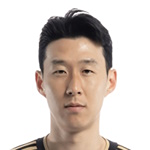



South Korea

Uzbekistan
More Friendlies Matches & Intelligence
 Ireland U18

 Denmark U19

 France U17

 China
China

South Korea Past Reports Recent Settled Archive
Uzbekistan Past Reports Recent Settled Archive
This report was generated by an AI model before kickoff using the data package available at publication time. It is preserved unchanged after settlement as a permanent archive. Model outputs are statistical estimates, not guarantees.