
Kawasaki Frontale vs Kashiwa Reysol Prediction & Match Analysis: Cup Rematch Dynamics — Scoreline Preview
- ▸Draw / Away Win — Regulation draw leads via the 1:1 script with Kashiwa Reysol's superior form supporting the away win branch (Confidence: Moderate, Value: High)
- ▸Under 2.5 Goals — Supported by a 2.25 combined goal expectancy lambda and Kashiwa's recent defensive record (Confidence: Moderate, Value: Moderate)
- ▸Second-half breakthrough following a level first half (Confidence: Moderate, Value: Moderate)
Matchup Intelligence & Head-to-Head
Season Benchmarks & H2HKawasaki Frontale Attack vs Defence Kashiwa Reysol
Recent Head-to-Head Meetings
No recent head-to-head records found in archive.
The J-League Cup Quarter-finals bring a compelling immediate rematch to Kawasaki Todoroki Stadium as Kawasaki Frontale host Kashiwa Reysol just four days after their league meeting. At the heart of this contest lies a fascinating contrast between Kawasaki Frontale's marginally higher positional threat indices and Kashiwa Reysol's superior recent trajectory, highlighted by a 90.0 weighted form score and three clean sheets in their last four outings. With both squads separated by a negligible 3.0 Elo rating points (1604.0 to 1607.0) and operating on an identical 4.1-day turnaround, the margin for error in this knockout clash is razor-thin. XG Mind AI's quantitative modeling, goal-expectancy anchors, and player-level performance indices deconstruct how Kashiwa's compact defensive structure will test Kawasaki's home attacking blueprint.
📌 Kawasaki Frontale vs Kashiwa Reysol: Match Intelligence Brief
- Fixture ID: 1648030
- Matchup: Kawasaki Frontale vs Kashiwa Reysol
- Competition: J-League Cup, Quarter-finals
- Kickoff Time: 2026-11-11 10:00 UTC
- Key Tactical Watchpoint: Can Kawasaki Frontale's midfield creators break down a Kashiwa Reysol defense that has conceded an average of just 0.54 decayed goals per game over its recent five-match unbeaten run?
📊 1. Head-to-Head Diagnostics: Kawasaki Frontale vs Kashiwa Reysol
⚔️ Head-to-Head History: Perfectly Balanced Rivalry With Recent Kashiwa Edge
Across the last 10 competitive meetings between these two sides, the overall record is deadlocked at 3 wins for Kawasaki Frontale, 3 wins for Kashiwa Reysol, and 4 draws, with each club scoring exactly 19 goals. However, Kashiwa Reysol have claimed consecutive J1 League victories on home soil in May and November 2026, while meetings at Kawasaki Todoroki Stadium have historically produced high-scoring spectacles, including a 5:3 league win for Kawasaki in February 2026 and a 3:1 J-League Cup victory in October 2025.
| Date | Competition | Home Team | Score (HT) | Away Team |
| 2026-11-07 | J1 League | Kashiwa Reysol | 2:1 (1:1) | Kawasaki Frontale |
| 2026-05-10 | J1 League | Kashiwa Reysol | 1:0 (0:0) | Kawasaki Frontale |
| 2026-02-08 | J1 League | Kawasaki Frontale | 5:3 (3:1) | Kashiwa Reysol |
| 2025-10-12 | J-League Cup | Kashiwa Reysol | 4:1 (1:1) | Kawasaki Frontale |
| 2025-10-08 | J-League Cup | Kawasaki Frontale | 3:1 (2:0) | Kashiwa Reysol |
📈 Team Form & Tactical Style Breakdown: Balanced Positional Progression vs Compact Transition Efficiency
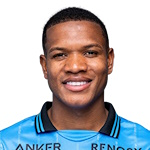
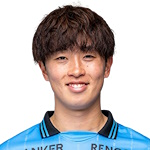
Home Team (Kawasaki Frontale): Kawasaki Frontale enter this quarter-final carrying a 46.0 weighted form score (LLWWW) after suffering consecutive away J1 League defeats against Yokohama F. Marinos (4:2) and Kashiwa Reysol (2:1 on November 7). Despite those road setbacks, their home form and cup pedigree remain constructive, having recorded consecutive 2:1 home league wins over Fagiano Okayama and Vissel Kobe alongside a 2:0 away J-League Cup victory over Sagan Tosu. Tactically profiled as a balanced side, Kawasaki rely heavily on the central orchestration of midfielder Y. Wakizaka (63.4 OTI, 64.8 GIM, 6.9 form rating) and the direct wide threat of forward Marcinho (66.7 OTI, 63.2 GIM, 84.9 overall score). Midfield pivot K. Tachibanada (64.6 DII) and Y. Yamamoto (59.8 DII, 61.5 GIM) carry the primary ball-winning burden, while full-back S. Miura (55.4 OTI) provides overlapping width. However, Kawasaki's defensive transition has proved vulnerable recently, contributing to a decayed goals-against average of 1.83 per match despite a baseline season concession rate of 1.00 goal per game.
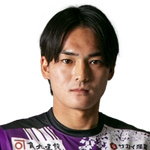
Away Team (Kashiwa Reysol): Kashiwa Reysol arrive at Kawasaki Todoroki Stadium in outstanding rhythm, boasting a 90.0 weighted form score across a five-match unbeaten run (WWWDW) across J1 League and AFC Champions League Elite play. Following a 3:2 away win at Kashima and a 0:0 road draw at Ratchaburi, Kashiwa strung together three straight home victories: 4:0 against Urawa, 2:0 over Daejeon Citizen, and a 2:1 triumph over Kawasaki Frontale just four days ago. Their offensive efficiency is reflected in a 2.20 decayed goals-for average, spearheaded by forward Y. Koizumi (58.1 OTI, 64.7 GIM, 7.1 form rating) and in-form attacker H. Yamauchi (58.7 OTI, 7.5 form rating). In midfield, T. Kubo (56.3 OTI, 66.0 GIM) and S. Toshima (53.6 OTI, 63.7 DII, 65.2 GIM) provide a cohesive link between defensive recovery and vertical progression, supported by N. Nakagawa (7.0 form rating) and K. Endo (6.9 form rating). Crucially, Kashiwa's defensive unit anchored by T. Koga (62.6 GIM) and D. Sugioka (52.2 OTI) has kept three clean sheets in its last four outings, driving their decayed goals-against average down to an impressive 0.54 per match.
🔍 Core Statistical Comparison: Narrow Baseline Goal Expectancy Edge for the Hosts
Because aligned competition-wide shot and possession tracking are not populated in the current cup package (xg_status.applied is false), the baseline statistical comparison relies on verified per-match scoring rates, goal-expectancy lambdas, and set-piece tallies.
| Metric | Kawasaki Frontale (Season) | Kashiwa Reysol (Season) |
| Goals Scored / match | 1.20 | 1.10 |
| Goals Conceded / match | 1.00 | 1.20 |
| Goal Expectancy Anchor (lambda) | 1.20 | 1.05 |
| Decayed Goals For Avg (Recent Form) | 1.70 | 2.20 |
| Decayed Goals Against Avg (Recent Form) | 1.83 | 0.54 |
| Set-Piece Goals (Recorded) | 5 | 6 |
⚠️ Key Absences & Squad Impact Assessment: No Verified Key Absences
No verified key absences are reported for either Kawasaki Frontale or Kashiwa Reysol ahead of kickoff. Both clubs show zero confirmed injured players and zero high-fatigue flags in their squad health diagnostics. However, because both teams competed against each other on November 7 (99 hours of rest, 3 matches played in the last 14 days), several primary contributors carry Medium fatigue risk classifications—including Y. Wakizaka, Marcinho, T. Ito, and K. Tachibanada for Kawasaki Frontale, alongside Y. Koizumi, T. Kubo, S. Toshima, N. Nakagawa, K. Endo, H. Yamauchi, T. Koga, and D. Sugioka for Kashiwa Reysol. Selective tactical rotation or second-half workload management remains a realistic variable for both coaching staffs.
🔬 Advanced Metrics Comparison: Positional Threat Indices vs Superior Visitor Form
| Tactical Dimension | Kawasaki Frontale | Kashiwa Reysol | Comparative Edge |
| Forward Threat Index (FW-OTI) | 53.4 | 51.7 | Slight Kawasaki edge (+1.7 index points) |
| Defensive Involvement (DF-DII) | 43.9 | 39.0 | Higher defensive action volume for Kawasaki |
| Defensive Quality (Goals Conceded / match) | 1.00 | 1.20 | Kawasaki hold the lower season-baseline concession rate |
| Midfield Playmaking (MF-OTI) | 54.9 | 52.5 | Slight Kawasaki edge (+2.4 index points) |
| Key Player Influence (Top GIM) | 64.8 (Y. Wakizaka) | 66.0 (T. Kubo) | Kashiwa's top creator holds a marginally higher relative influence |
| Adjusted Squad Form Rating | 6.6 | 7.0 | Clear current-form advantage for Kashiwa Reysol (+0.4 raw scale) |
| Clean Sheet Frequency (Recent 5 Matches) | 20.0% | 60.0% | Kashiwa hold a substantial recent shutout advantage |
| Set-Piece Goals Scored | 5 | 6 | Near-parity with a 1-goal edge to Kashiwa |
Penetration & Matchup Analysis:
Kawasaki Frontale hold a slight edge in positional attacking indices, posting a 53.4 FW-OTI and 54.9 MF-OTI compared to Kashiwa Reysol's 51.7 FW-OTI and 52.5 MF-OTI. Under normal circumstances, this creativity—led by Y. Wakizaka (63.4 OTI) and T. Ito (59.1 OTI)—would test a Kashiwa side that concedes 1.20 goals per match on the season baseline. However, Kashiwa's available squad form rating of 7.0 (versus Kawasaki's 6.6) and their recent defensive surge (0.54 decayed goals conceded per game, 3 clean sheets in 5 matches) demonstrate that the visitors are currently defending with far greater collective organization than their season-long concession average suggests.
⚖️ Referee & Officiating Analysis: Match Official Pending Confirmation
- Match Official: To be announced
- Officiating Tendency: With the match official unconfirmed at the analysis cutoff, no referee-specific card or penalty baseline is applied.
- Tactical Repercussions: In a knockout quarter-final featuring 11 combined set-piece goals across both squads (5 for Kawasaki, 6 for Kashiwa), foul thresholds around the attacking third will be critical. If a strict official is appointed, midfield ball-winners K. Tachibanada (64.6 DII) and S. Toshima (63.7 DII) will need to calibrate their counter-pressing challenges carefully to avoid gifting dead-ball delivery angles.
🤔 2. Strategic Tension & Contrasting Match Narratives
🟢 Arguments Supporting Kawasaki Frontale
- Home Venue & Cup Sample Resilience: Kawasaki Frontale have won all 3 of their recorded matches in the current J-League Cup sample without conceding a goal, and they defeated Kashiwa Reysol 5:3 and 3:1 in the last two head-to-head meetings hosted at Kawasaki Todoroki Stadium.
- Superior Positional Creation Metrics: Kawasaki's midfield (54.9 MF-OTI) and forward group (53.4 FW-OTI) outscore Kashiwa's positional averages, driven by Marcinho (66.7 OTI) and Y. Wakizaka (63.4 OTI), alongside baseline goal expectancy support (1.20 lambda_home vs 1.05 lambda_away).
- Immediate Tactical Adjustment Opportunity: Having faced Kashiwa just four days ago in a narrow 2:1 away defeat that was level 1:1 at half-time, long-serving Kawasaki head coach (648 days in charge) has immediate video and tactical feedback to adjust home spacing.
🔴 Arguments Opposing Kawasaki Frontale / Supporting Kashiwa Reysol
- Psychological & Tactical Momentum from November 7: Kashiwa Reysol defeated Kawasaki Frontale 2:1 just four days ago and are unbeaten in their last three head-to-head encounters (2 wins, 1 draw), demonstrating a repeatable tactical blueprint against Frontale's buildup.
- Superior Squad Form & Defensive Solidity: Kashiwa hold a 90.0 weighted form score (WWWDW) and an available squad form average of 7.0 (vs Kawasaki's 6.6), conceding just 1 goal across their last four fixtures (0.54 decayed goals against average) while Kawasaki conceded 6 goals in their last two matches.
- Balanced Long-Term Elo & Multi-Pronged Threat: Kashiwa carry a slight 1607.0 to 1604.0 Elo advantage and feature six top-rated starters with form ratings between 6.8 and 7.5—led by H. Yamauchi (7.5), Y. Koizumi (7.1), and N. Nakagawa (7.0)—giving them multiple transition outlets to punish Kawasaki's 1.83 decayed goals-against rate.
Contextual & Motivational Risk Assessment
As a J-League Cup Quarter-final, competitive incentive is high for both clubs, yet schedule congestion introduces a layer of tactical caution. Both teams have played 3 matches in the past 14 days and share an identical 99-hour (4.1-day) recovery window since their November 7 league duel. With twelve listed core players across the two squads carrying Medium fatigue risk flags, neither side is positioned to sustain reckless 90-minute high pressing. Expect a structured, chess-like opening phase where neither team wants to concede an early transition goal.
🧠 3. Empirical Expectancies: Poisson Matrix & Sharp Consensus
- Analytical Modeling Deployed: Independent Poisson Expected-Goal Matrix anchored by season per-match scoring/conceding rates (lambda_home = 1.20, lambda_away = 1.05, lambda_total = 2.25, lambda_diff = +0.15) cross-checked against time-decayed form and player-level OTI/GIM metrics.
- Model Quantitative Insights: The baseline Poisson distribution illustrates how tightly matched these two teams are on fundamental season rates: a 39.4% home win probability, 28.6% draw probability, and 31.9% away win probability. The combined non-home-win density stands at 60.5% (Draw + Away Win). In the exact-score matrix, low-to-moderate totals dominate, with 1:1 leading all outcomes at 13.3%, followed by 1:0 (12.6%), 0:1 (11.1%), 0:0 (10.5%), and 2:1 (8.0%). Across the total-goals distribution, two-goal outcomes (26.7%) and three-goal outcomes (20.0%) represent 46.7% of the entire probability mass, while totals of two or fewer goals account for 60.9% of the baseline distribution.
- Market Sentiment & Professional Consensus: No verified pre-match 1X2 or totals odds snapshot is supplied in the match package (market_one_x_two is null, and favourite_profile.status is no_clear_favourite), so this projection relies entirely on fundamental performance data, Elo parity, and verified squad metrics rather than market pricing.
- Dynamic Line & Price Movement: In the absence of market movement feeds, cross-checking the 2.25 baseline lambda against Kashiwa's 0.54 recent decayed goals-against rate confirms that scoring expectations should remain anchored around 2 to 3 total goals rather than projecting an open shootout.
🎯 4. Comprehensive Match Projection & Tactical Scripts
🧭 Upset Risk Assessment: With no clear favourite established by the baseline profile and only a 3.0-point Elo separation (1607.0 for Kashiwa Reysol versus 1604.0 for Kawasaki Frontale), both sides enter on nearly equal footing. Kawasaki Frontale rely on home advantage at Kawasaki Todoroki Stadium, a 1.20 to 1.05 goal-expectancy edge, and slight advantages in forward (53.4 vs 51.7) and midfield (54.9 vs 52.5) offensive threat indices led by Y. Wakizaka and Marcinho, though that edge is tempered by consecutive league defeats and a 1.83 decayed goals-against rate. Conversely, Kashiwa Reysol possess a clear route to avoid defeat through their 7.0 average squad form, 0.54 decayed goals-against rate across a five-match unbeaten run, and a 2:1 win over Kawasaki four days ago powered by H. Yamauchi (7.5 form) and Y. Koizumi (7.1 form). Consequently, a draw-or-away-win trajectory is the best-supported call, with matchday rotation on a 4.1-day turnaround serving as the primary unverified variable.
Final Strategic Synthesis
When weighing Kawasaki Frontale's slight season-baseline lambda edge (+0.15) and home venue against Kashiwa Reysol's superior current form (90.0 vs 46.0 weighted index), defensive stinginess (three clean sheets in four matches), and direct psychological edge from their 2:1 victory four days ago, the evidence points toward a tightly contested quarter-final where Kashiwa Reysol avoid defeat in regulation time. The most probable tactical convergence is a compact first half that yields either a 1:1 deadlock—the single highest-density scoreline in the Poisson model at 13.3%—or a disciplined 1:2 away victory if Kashiwa's superior transition finishers exploit Kawasaki's defensive lapses in the final 30 minutes.
- ⭐⭐ AI Confidence Rating: Moderate
⚠️ Rotational risk or key personnel uncertainty detected; rating has been adjusted downward accordingly.
🔑 4.1 Core Analytical Viewpoints
🧭 Step 0 — 1X2 Direction Determination (Single vs. Double Chance)
Following the evidence-first evaluation, favourite_profile designates this fixture as no_clear_favourite (lambda_diff of just 0.15 and Elo difference of -3.0). Evaluating both teams symmetrically, neither side holds a verified absentee advantage, leaving a balanced duel where Kashiwa Reysol's recent 2:1 head-to-head win, 7.0 squad form rating, and 0.54 decayed goals-against average slightly outweigh Kawasaki's home baseline. Because the 1:1 regulation draw (13.3% model density) and a narrow Kashiwa victory both carry substantial tactical support in a knockout setting, retaining the compound Draw / Away Win direction captures both primary scripts.
Strategic Opening Context:
An immediate four-day turnaround from their 2:1 league clash sets the stage for a cagey, highly tactical J-League Cup Quarter-final at Kawasaki Todoroki Stadium. Following comprehensive synthesis across quantitative models and tactical intelligence, MatchMind AI identifies the core thesis below as the most balanced probabilistic trajectory for this encounter. All projections represent statistical estimates for research purposes, and readers are encouraged to evaluate tactical context independently.
- Primary Thesis (Core): Draw / Away Win — The draw leads as the primary single outcome via the 1:1 tactical stalemate script (backed by 28.6% baseline draw probability, 4 draws in the last 10 H2H meetings, and equal 4.1-day rest), while Away Win serves as the secondary decisive route given Kashiwa Reysol's 90.0 weighted form score, 7.0 squad form rating, and consecutive victories over Kawasaki (Confidence: Moderate, Value Index: High)
- Secondary Angle (Value): Under 2.5 — Supported by a 2.25 combined goal-expectancy lambda (60.9% baseline probability for 0 to 2 goals) and Kashiwa's 0.54 decayed goals-against rate (Confidence: Moderate, Value Index: Moderate)
- Contingency Angle (Hedge / Upset): Second-half breakthrough via bench impact after a level opening 45 minutes, reflecting that 3 of the last 5 H2H meetings and Kawasaki's recent cup matches were tied at the interval (Confidence: Moderate, Value Index: Moderate)
Strategic Summary: Backing Draw / Away Win aligns the mathematical reality of a near-zero baseline gap (60.5% combined Draw/Away Win Poisson probability, 1607.0 vs 1604.0 Elo) with Kashiwa Reysol's demonstrably sharper current form and defensive organization.
Core Recommendation: Expect Kashiwa Reysol to hold firm in regulation time, with a 1:1 draw as the primary projection and a 1:2 away victory as the secondary branch.
🔥 4.2 Total Goals & Over/Under 2.5 Projection
1️⃣ Primary Goal Count: 2 Goals (Model Probability: 27%)
- Tactical Deduction: Exactly 2 goals is the single highest-probability bucket in the Poisson distribution at 26.7% (rounded to 27%). Tactically, this aligns directly with the modal 1:1 scoreline. When these two sides met on November 7, they entered half-time locked at 1:1 after trading structured attacks. In a quarter-final cup setting with 12 core players carrying Medium fatigue risk on 4.1 days of rest, neither midfield—anchored by K. Tachibanada (64.6 DII) for Kawasaki and S. Toshima (63.7 DII) for Kashiwa—will leave the central channels wide open. Both teams possess enough creative quality via Y. Wakizaka (63.4 OTI) and T. Kubo (56.3 OTI) to find one breakthrough, before conservative late-game risk management favors holding the 1:1 regulation draw rather than overcommitting numbers forward.
2️⃣ Secondary Goal Count: 3 Goals (Model Probability: 20%)
- Tactical Deduction: Exactly 3 goals represents 20.0% of the baseline probability distribution and captures the decisive second-half transition script that occurred four days ago (2:1). While Kashiwa Reysol's defense has been formidable overall (0.54 decayed goals conceded), Kawasaki Frontale have scored exactly 2 goals in four of their last five matches across all competitions and carry a 1.70 decayed goals-for average. If an early set-piece goal (11 combined dead-ball goals between the sides) forces the trailing team to abandon its compact mid-block, the space behind advancing full-backs S. Miura and D. Sugioka will allow high-form forwards H. Yamauchi (7.5 form) and Marcinho (66.7 OTI) to push the match total to 3 goals via a 1:2 outcome.
3️⃣ Over / Under 2.5 Quantitative Deduction: Under 2.5 (Model/Market Supported)
- Tactical & Liquidity Rationale: The quantitative baseline points toward Under 2.5 goals, driven by a combined lambda_total of 2.25 (1.20 for Kawasaki Frontale plus 1.05 for Kashiwa Reysol). Summing the baseline Poisson probabilities for 0 goals (10.5%), 1 goal (23.7%), and 2 goals (26.7%) yields a 60.9% mathematical expectation for Under 2.5 goals, with Both Teams Not To Score also slightly favored at 54.6%. Tactically, while historic league clashes at Todoroki have occasionally opened up, knockout cup ties and Kashiwa's current defensive structure (three shutouts in four games, 0.54 decayed goals against) strongly restrict high-volume chance creation. Our primary 1:1 scoreline and 2-goal primary total anchor the Under 2.5 call, while the 3-goal / 1:2 secondary selections explicitly map the narrow threshold risk should a late transition break the deadlock.
🥅 4.3 Final Scoreline Probability Matrix
1️⃣ Primary Projected Scoreline: 1:1 (Model Density: 13.3%)
- Matrix Reasoning: The 1:1 draw is the single highest-density outcome in the independent Poisson matrix at 13.3% and serves as the natural convergence point of Kawasaki Frontale's 1.20 goal expectancy and Kashiwa Reysol's 1.05 goal expectancy. Four of the last ten head-to-head meetings have ended level after 90 minutes, and their clash four days ago stood at 1:1 at the interval. Kawasaki's midfield playmaking (54.9 MF-OTI, led by Y. Wakizaka's 64.8 GIM) gives the hosts sufficient territorial thrust to score once at Kawasaki Todoroki Stadium, where they have netted at least two goals in three straight home outings. Simultaneously, Kashiwa's superior squad form (7.0 average) and attacking duo of Y. Koizumi (7.1 form) and H. Yamauchi (7.5 form) are well-equipped to exploit a Kawasaki backline conceding 1.83 decayed goals per match, locking the teams into a balanced 1:1 regulation finish.
2️⃣ Secondary Projected Scoreline: 1:2 (Model Density: 8.4%)
- Matrix Reasoning: If the stalemate breaks in the final third of the match, the 1:2 away win is the best-supported decisive script—mirroring the exact scoreline Kashiwa Reysol achieved against Kawasaki Frontale on November 7. Kashiwa enter with a 2.20 decayed goals-for average and have scored 2 or more goals in four of their last five fixtures (including 3 at Kashima, 4 vs Urawa, 2 vs Daejeon Citizen, and 2 vs Kawasaki). Conversely, Kawasaki Frontale have conceded 2 goals to Kashiwa and 4 goals to Yokohama F. Marinos in their last two matches. Should Kawasaki push their defensive line higher in the second half to chase qualification at home, T. Kubo (66.0 GIM) and N. Nakagawa (7.0 form) have the vertical passing range to release Kashiwa's forwards for a decisive second goal.
⏳ 4.4 Half-Time / Full-Time Trend Probabilities
1️⃣ Primary Trend: Draw-Draw (Model Probability: 24%)
- Script Reasoning: Judging the first half first, both historical head-to-head patterns and cup profiles point strongly toward a level interval. Three of the last five H2H meetings—including November 7's 2:1 clash (1:1 at HT), May 2026's 1:0 match (0:0 at HT), and October 2025's cup tie (1:1 at HT)—were drawn at half-time. Furthermore, in Kawasaki's indicative 3-match cup sample (htft_profile.home), they were level at half-time in 2 of 3 outings (ht_draw_rate = 0.667) with a remarkably low first_half_goal_share of just 0.143. In the second half, given identical 4.1-day turnarounds and Kashiwa's compact 0.54 decayed goals-against structure, neither side holds a fitness edge to force a late winner, making Draw-Draw (aligned with our 1:1 primary scoreline) the premier chronological script.
2️⃣ Secondary Trend: Draw-Loss (Model Probability: 16%)
- Script Reasoning: This secondary candidate addresses where the second-half call is most likely to diverge from a stalemate while retaining the high-probability first-half draw. Exactly as transpired on November 7—when the teams went into the break tied 1:1 before Kashiwa Reysol won the second half 1:0 to seal a 2:1 victory (which translates to Draw-Loss from Kawasaki Frontale's home perspective)—both sides are likely to cancel each other out during a cautious opening 45 minutes. After the interval, Kashiwa's superior overall squad form (7.0 vs 6.6) and Kawasaki's recent defensive fragility (6 goals conceded across their last two matches) create a clear pathway for the visitors to edge the second half after a level break.
⏳ 4.5 Match Progression & Live Tactical Scripts
- Attacking & Defensive Tempo Fingerprint:
- Kawasaki Frontale Attacking Profile: Type B (Late Accelerators) — In their current competition profile, only 14.3% of Kawasaki's goals have arrived in the first half (first_half_goal_share = 0.143), with patient midfield circulation through Y. Wakizaka and Y. Yamamoto designed to wear down opponents after the 55th minute.
- Kashiwa Reysol Defensive Vulnerability: Type E (Mid-Match Vulnerability) — While Kashiwa have kept clean sheets in three of their last four matches, their concessions against Kawasaki (2:1) and Kashima (3:2) occurred when transitional spacing stretched between the 35th and 65th minutes.
Part 1: Base Case Match Flow (Standard Trajectory)
- 0–30 Minutes: Both teams adopt measured mid-blocks to conserve energy on their 99-hour turnaround. Kawasaki control central possession through K. Tachibanada and Y. Wakizaka, while Kashiwa stay compact behind S. Toshima and T. Koga, limiting box entries.
- 30–60 Minutes: Tempo increases on either side of the interval. Wide overloads featuring Marcinho and S. Miura for Kawasaki are countered by quick vertical releases to Y. Koizumi and H. Yamauchi, producing an exchange of goals around the middle third of the match.
- 60–90 Minutes: With Medium fatigue risk affecting 12 core starters, both benches are utilized heavily after the 65th minute. Defensive lines drop five yards deeper to protect against fatal counter-attacks in the closing quarter-hour.
- 📊 Baseline Projections:
- Goal Expectancy Flow: Approximately 35% of total goal expectancy in the first half (0.80 xG/lambda equivalent) and 65% in the second half (1.45 lambda equivalent).
- Corner Trajectory: Moderate, steady accumulation driven by blocked wide crosses and set-piece pressure.
Part 2: Tactical Contingency Plans (Strategic Deviations)
- Contingency Scenario 1: Frustrated Favorite / Host Overcommitment
- Trigger Condition: Scoreless (0:0) or tied (1:1) entering the 70th minute with Kawasaki pushing both full-backs high into Kashiwa's half.
- Tactical Deviation: Kashiwa Reysol absorb pressure through T. Koga and spring T. Kubo and H. Yamauchi into the vacated wide channels, shifting the late-goal probability toward the 1:2 Draw-Loss branch.
- Corner Volume Alert: Moderate.
- Contingency Scenario 2: Early Set-Piece Breakthrough
- Trigger Condition: Either side converts a corner or free-kick within the first 25 minutes (reflecting their 11 combined set-piece goals).
- Tactical Deviation: The early-control script is replaced by an open end-to-end rhythm as the trailing side abandons its mid-block early, elevating the 3-goal total branch.
- Corner Volume Alert: High.
🚩 4.6 Set-Piece Battle Preview
- Dead-Ball Threat Level: Elevated
- Tactical Breakdown: Both teams demonstrate tangible dead-ball efficiency in their tactical fingerprints, with Kawasaki Frontale recording 5 set-piece goals and Kashiwa Reysol registering 6 set-piece goals. Kawasaki rely on the delivery precision of Y. Wakizaka (64.8 GIM) targeting center-back H. Taniguchi (51.4 DII) and forward Derik Lacerda, while Kashiwa utilize T. Kubo (66.0 GIM) and K. Endo to service T. Koga and D. Sugioka. In a tight quarter-final where open-play space will be restricted, dead-ball execution represents a primary scoring avenue for both sides.
🚩 4.7 Corner & Dead-Ball Dynamics Preview
- Corner Volume Expectation: Neutral (8.5–10.5)
- Tactical Rationale: While season-wide per-match corner averages are unpopulated in the cup package, tactical style indicators point to a Neutral (8.5–10.5) corner range. Kawasaki Frontale generate width through forward Marcinho (66.7 OTI) and attacking full-back S. Miura (55.4 OTI), while Kashiwa counter through left-sided defender D. Sugioka (52.2 OTI) and wide midfielders. However, because both teams play through technical central combinations (MF-OTI of 54.9 and 52.5) and face a compact 4.1-day turnaround, sustained end-line bombardment will be moderated by long spells of central midfield recycling.
💬 Reader Engagement & Tactical Debate
Having watched Kashiwa Reysol defeat Kawasaki Frontale 2:1 in league play just four days ago, do you expect Kawasaki's midfield duo of Y. Wakizaka and Y. Yamamoto to unlock Kashiwa's compact block at Todoroki Stadium, or will Kashiwa's 90.0 form trajectory carry them through this quarter-final? Share your scoreline predictions below!
❓ Frequently Asked Questions (FAQ)
Q1: What is the most probable outcome for Kawasaki Frontale vs Kashiwa Reysol?
A: The most balanced analytical projection is Draw / Away Win, with a regulation draw as the leading single outcome and a Kashiwa Reysol victory as the primary alternative. While baseline Poisson lambdas are nearly even (1.20 vs 1.05, giving a 60.5% combined Draw/Away Win probability), Kashiwa's 90.0 weighted form score, 0.54 decayed goals-against rate, and 2:1 win over Kawasaki four days ago tilt the matchup toward the visitors avoiding defeat.
Q2: What are the primary projected scoreline and total goals outlook?
A: The primary projected scoreline is 1:1 (13.3% model density) and the secondary scoreline is 1:2 (8.4% density), paired with exact total-goal selections of 2 goals (primary, 27%) and 3 goals (secondary, 20%). Overall, Under 2.5 goals is supported by a 2.25 combined goal-expectancy lambda (60.9% baseline probability for 2 or fewer goals) and Kashiwa's three clean sheets in their last four matches.
Q3: What is the single biggest tactical x-factor or lineup absence in this match?
A: With no verified key absences reported for either squad, the decisive tactical x-factor is Kashiwa Reysol's defensive transition stability (0.54 decayed goals conceded per game) combined with how both teams manage Medium fatigue risk across 12 key starters on a 99-hour turnaround from their November 7 meeting.
Q4: How do the advanced metrics (xG and form) compare to the market price?
A: With no market odds feed supplied and favourite_profile indicating no clear favourite (Elo ratings of 1604.0 vs 1607.0), the advanced metrics reveal an intriguing split: Kawasaki hold a slight edge in positional threat indices (53.4 vs 51.7 FW-OTI; 54.9 vs 52.5 MF-OTI), whereas Kashiwa hold a clear advantage in available squad form (7.0 vs 6.6) and recent defensive prevention.
Key Players to Watch
 MF
 FW
 MF
 FW
 MF
 MF

Kawasaki Frontale

Kashiwa Reysol
More J-League Cup Matches
 Vissel Kobe

 Yokohama F. Marinos

 Urawa
 Machida Zelvia
Kawasaki Frontale Past Reports Recent Settled
Kashiwa Reysol Past Reports Recent Settled
This report was generated by an AI model before kickoff using the data package available at publication time. It is preserved unchanged after settlement as a permanent archive. Model outputs are statistical estimates, not guarantees.